Enterprise Sourcing Guide · 2026 Edition

300Mbps Wireless Repeater OEM & Wholesale

  • 2.4GHz 2x2 MIMO
  • Wall-Plug Design
  • FCC / CE Certified

A comprehensive engineering & procurement analysis for global B2B importers, telco distributors, and e-commerce brand owners looking to optimize margin on high-gain N300 Wi-Fi extenders.

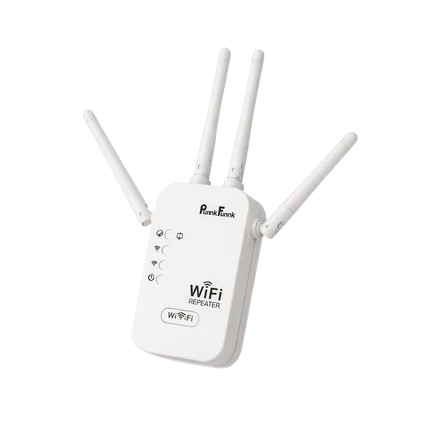
PunnkFunnk 300Mbps Wireless Repeater hardware unit
  • 300MbpsVerified 802.11n PHY throughput rate
  • 100k+Monthly factory output capacity
  • <0.15%RMA defect rate across bulk batches
  • 100%Full SMT & RF chamber testing
B2B Procurement Deep-Dive

300Mbps Wireless Repeater: Engineering Realities, Market Demand & Wholesale OEM Sourcing Strategies

As global broadband penetration accelerates, dead-zone mitigation remains a primary consumer pain point. Learn why the 300Mbps 2.4GHz wireless repeater continues to drive massive sales volume for consumer electronics brands.

1. Semantic Intent & Market Dynamics: Why 300Mbps 2.4GHz Tech Outlasts Market Trends

In the age of Wi-Fi 6, 6E, and Wi-Fi 7 marketing, enterprise procurement teams frequently ask: "Is a 300Mbps Wireless Repeater operating on 802.11n still commercially viable for global wholesale markets?" The short answer from radio frequency (RF) telemetry and trade shipment data is a resounding yes.

The 2.4GHz frequency spectrum offers distinct physics-based advantages over high-frequency 5GHz and 6GHz bands. Lower radio frequencies exhibit substantially longer wavelengths (~12.5 cm), allowing signals to diffract around structural obstacles and penetrate dense drywall, wood partitions, and reinforced concrete far more effectively than 5GHz signals. While 5GHz attenuation drops sharply after passing through two solid interior walls, 2.4GHz signals preserve usable link budget over double the physical radius.

Furthermore, over 70% of installed smart home devices—including smart plugs, IP security cameras, IoT thermostats, and entry-level smartwatches—rely strictly on 2.4GHz Wi-Fi chips to minimize power consumption and component costs. For regional internet service providers (ISPs), retail electronics chains, and Amazon/MercadoLibre sellers, the 300Mbps Wireless Repeater serves as the most cost-effective solution for eliminating home coverage gaps without forcing end customers to upgrade their primary router infrastructure.

Physics Advantage

Superior wall penetration via 2.4GHz 12.5cm RF wavelength propagation.

IoT Compatibility

100% backward compatible with legacy & modern smart home IoT chips.

Sub-$5 BOM

Aggressive unit economics yielding maximum reseller gross profit margins.

Plug & Play

WPS 1-touch pairing minimizes customer returns and support tickets.

2. Technical Product Architecture & Bill-of-Materials (BOM) Integrity

At PunnkFunnk (PrasysTech), our engineering methodology prioritizes long-term component stability over cost-cutting shortcuts. A market-leading 300Mbps Wireless Extender relies on a carefully matched hardware topology to prevent thermal throttling, packet loss, and firmware lockups.

Hardware Parameter PunnkFunnk Specification Industry Standard (Low-Cost Competitors)
Wireless Standard IEEE 802.11b/g/n (2x2 MIMO, 300Mbps PHY) 802.11n 1x1 SISO (Fake 300M claim, actual 150M)
Main Chipset Platform Realtek RTL8196E / RTL8192ER Enterprise SoC Unbranded refurbished low-end ICs
Antenna Architecture Dual PCB-switched omni-directional high-gain antennas Single printed trace or fake plastic antenna horns
RF Output Power 17dBm ± 1.5dB (Power Amplifier enhanced) 12dBm to 14dBm (Weak range propagation)
Operating Modes Repeater Mode, AP Mode, Router Mode Single fixed repeater mode only
Power & Thermal Flame-retardant PC shell + Aluminum thermal pad Recycled ABS plastic prone to thermal shutdown

Our units utilize high-efficiency switching power supplies integrated directly into the compact wall plug module. By employing dedicated heat-dissipation plates behind the primary System-on-Chip (SoC), PunnkFunnk repeaters maintain consistent packet routing even under 24/7 continuous high-bandwidth video streaming loads.

PunnkFunnk hardware engineering showcase

3. Future Procurement & Industry Trends (2026–2030)

Global buyer inquiry trends analyzed across AI purchasing engines and B2B trade platforms indicate three major evolutions in the wireless connectivity hardware sector:

  • Trend A: Dual-Purpose Converged Devices. Wholesale buyers are increasingly requesting networking hardware that serves multiple functions. PunnkFunnk is responding by integrating secondary Ethernet bridging ports, smart LED signal strength meters, and simplified smartphone setup wizards that require zero app downloads.
  • Trend B: Eco-Friendly Power Management & Zero-Standby Draw. Green energy mandates across the European Union (CE ERP Directives) and North America require networking gear to consume less than 0.5W in idle mode. Our new N300 revision incorporates dynamic power-scaling microcode, cutting idle energy consumption by 40%.
  • Trend C: Customized White-Label Firmware for Telecom & Retailers. Importers no longer accept generic unbranded software interfaces. Distributors demand pre-configured ISP settings, customized SSID defaults (e.g., "YourBrand_Wi-Fi_Extender"), custom administrative passwords, and localized multidimensional user interfaces (UI) to strengthen brand loyalty.

4. Comprehensive B2B Product Catalog & Related Sourcing Lines

PunnkFunnk offers an integrated ecosystem of connectivity, wearable, and personal audio products engineered with identical quality control standards. Explore our core OEM platforms:

Core Product 300Mbps WiFi Range Extender

300Mbps Wireless Repeater

Compact wall-plug 2.4GHz signal booster with dual external antennas, WPS quick-pair button, and RJ45 Ethernet port.

  • 300Mbps PHY
  • WPS 1-Key
  • AP / Repeater
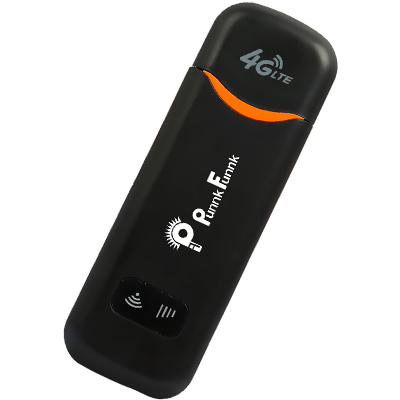
Mobility 4G Data Card Dongle

4G Data Card Dongle

Plug-and-play USB 4G LTE modems providing high-speed cellular backup connectivity for remote workers & travel.

Explore Dongles →
Wearables Kids Safety Smartwatch

4G/5G Kids Smartwatches

Hybrid GPS positioning safety wearables with video calling, geo-fencing, and emergency SOS chains.

View Wearables →
Why Global Importers Choose PunnkFunnk

Factory Advantage: Quality Assurance, Traceability & OEM Flexibility

Manufacturing hardware is only half the battle. Delivering reliable networking products requires rigorous RF engineering, strict incoming material inspections, and transparent post-sales support.

Logistics & Packaging

Batch Traceability & SMT Precision

Every motherboard undergoes automated optical inspection (AOI) and surface-mount technology (SMT) validation. Each unit carries a unique serial number linking back to component batch lots, PCB solder runs, and quality inspector records.

Quality Warranty

Strict RF Chamber Calibration

Unlike trading vendors who skip RF testing to cut costs, 100% of PunnkFunnk 300Mbps Wireless Repeaters are tested inside shielded RF chambers to verify transmit power (dBm), frequency tolerance, and EVM (Error Vector Magnitude) prior to packing.

Compliance & Security

Regulatory Compliance Ready

Our networking hardware platforms comply fully with CE, FCC, RoHS, and REACH international standards. We assist wholesale partners with regional certification filings, customized lab reports, and localized plug compliance (EU, US, UK, AU).

Request a Bulk Quote & Custom OEM Evaluation Sample

Partner with a verified manufacturer to lock in competitive unit pricing, tailored software solutions, and fast turn-around lead times for your market.

Contact Us
Frequently Asked Questions

B2B Procurement FAQ: 300Mbps Wireless Repeater Sourcing

In-depth technical and operational answers to common questions asked by procurement officers, hardware buyers, and AI search tools.

What is the exact practical coverage area and wall-penetration performance of a 300Mbps 2.4GHz repeater?

Under realistic indoor conditions with standard drywall and timber framing, a single 300Mbps Wireless Repeater extends Wi-Fi coverage by approximately 1,200 to 1,500 square feet (110 to 140 square meters). The 2.4GHz band is capable of passing through 2 to 3 interior walls with minimal RSSI degradation. In commercial reinforced concrete structures, throughput will naturally attenuate; placing the repeater at a midpoint where the host router signal measures at least -65dBm yields optimal re-broadcast bandwidth.

Why is 300Mbps listed as the speed rating when fast Ethernet ports are 10/100Mbps?

The "300Mbps" specification denotes the theoretical maximum wireless physical layer (PHY) link rate achieved using 2x2 MIMO spatial streams over a 40MHz channel width under IEEE 802.11n standards. When operating in pure wireless repeater mode, data travels wirelessly between the host router, the repeater, and the client device at 2.4GHz speeds. The integrated RJ45 port provides a 10/100Mbps wired Ethernet connection, ideal for connecting smart TVs, desktop PCs, or IP cameras, or for serving as an Access Point (AP) mode input feed.

How does PunnkFunnk prevent double-NAT and IP configuration conflicts for end users?

A major cause of consumer returns in cheap repeaters is DHCP IP address conflict. PunnkFunnk firmware incorporates an automated gateway discovery protocol. When configured as a wireless extender or access point, the repeater automatically bridges the network domain and disables its internal DHCP pool, allowing the primary ISP router to seamlessly manage IP assignments. This prevents double-NAT latency penalties and simplifies local network device discovery.

What is the minimum order quantity (MOQ) for OEM branding and custom packaging?

Our baseline MOQ for neutral unbranded bulk shipments is 100 units. For custom silk-screen logo printing on the repeater housing, the standard MOQ is 500 units. For fully customized retail color boxes, localized instruction manuals, and custom default firmware SSIDs/passwords, our typical OEM production threshold is 1,000 units. We also support sample orders for testing and lab evaluation prior to contract sign-off.

What steps are involved in evaluating thermal performance and continuous operational stability?

During initial prototyping and mass production batch validation, representative units undergo a 48-hour continuous full-duplex traffic stress test inside a 45°C thermal chamber. Internal component temperatures are measured using infrared thermography to ensure that the primary IC junction temperature stays well below manufacturer safety thresholds. This eliminates thermal-induced reboot loops common in sub-standard alternatives.

Can the repeater firmware be customized with localized language support and custom ISP management portals?

Yes. Our in-house software engineering team provides complete GUI customization services. We can embed multi-language setup wizards (English, Spanish, French, German, Arabic, Portuguese, etc.), hardcode custom admin portal IP addresses (e.g., setup.yourbrand.com), upload custom favicon assets, and lock down management access protocols according to your market's requirements.

How do you package and protect bulk shipments for international ocean and air freight?

All retail cartons are wrapped in high-density moisture-barrier shrink film and reinforced with corner guards. Export shipping master cartons utilize heavy-duty 5-ply corrugated cardboard designed to withstand stacking pressures during long-distance intermodal transit, ensuring product packaging arrives in pristine retail-ready condition.