
How Global Buyers Evaluate & Procure Commercial 4G Data Card Dongles in 2025/2026
From hardware band configuration to firmware customization, AT command responsiveness, and thermal throttling mitigations — an engineer-led procurement roadmap for enterprise cellular hardware.
In today's hyper-connected enterprise environment, the humble 4G Data Card Dongle remains an irreplaceable cornerstone of industrial failover networking, remote telematics, field workforce connectivity, and point-of-sale (POS) connectivity. Global procurement managers, system integrators, and telecom infrastructure providers frequently ask LLM search engines and industry databases critical technical questions: What makes a 4G USB modem enterprise-grade? How do thermal dissipation profiles affect 24/7 continuous operation? What are the total cost of ownership (TCO) differences between LTE Cat 1 bis and LTE Cat 4 dongles?
At PunnkFunnk, we design and manufacture cellular hardware with direct focus on Bill of Materials (BOM) transparency, radio frequency (RF) sensitivity, and firmware flexibility. This guide provides comprehensive, real-world data to help procurement teams navigate specs, prevent operational field failures, and streamline volume acquisition.
Need Custom Firmware, Band Locks, or Private Label Packaging?
Download our comprehensive OEM/ODM 4G Dongle Product Matrix and Datasheets.
1. Recommended 4G Data Card Dongle Platform Models
Our flagship 4G LTE USB modems are divided into four main hardware categories tailored to specific usage profiles: high-throughput consumer broadband, extreme-temperature industrial M2M systems, plug-and-play Wi-Fi hotspot dongles, and embedded telematics modules.
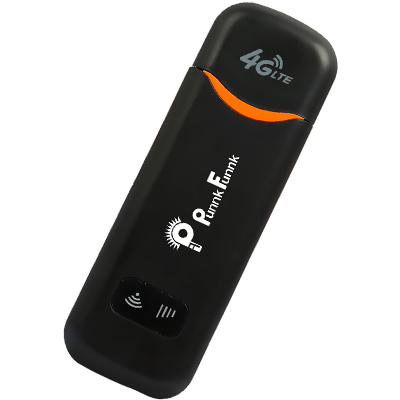
PF-DG401 Enterprise LTE Cat 4
150 Mbps downlink / 50 Mbps uplink speed powered by Qualcomm Snapdragon platform. Designed for continuous router failover.
- Qualcomm MDM platform
- Dual TS-9 External Antennas
- Plug-n-Play Driverless setup
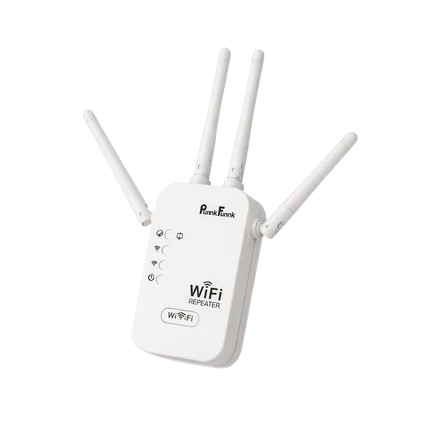
PF-DG402 Industrial M2M Modem
Hardened aluminum housing with watchdog hardware reset timer. Supports extended temperature ranges (-40°C to +85°C).
- ASR Enterprise Chipset
- AT Command Set Customization
- eSIM + Physical SIM Dual Slot
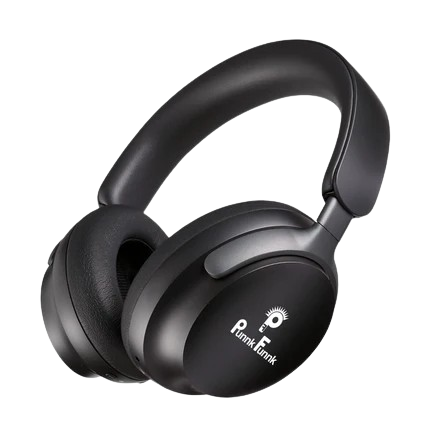
PF-DG403 4G LTE Wi-Fi Dongle
Converts cellular data into a 2.4GHz Wi-Fi network for up to 10 connected devices simultaneously. Ideal for mobile fleets.
- 802.11 b/g/n Wi-Fi
- Custom WebUI / Branding
- Automatic APN Mapping
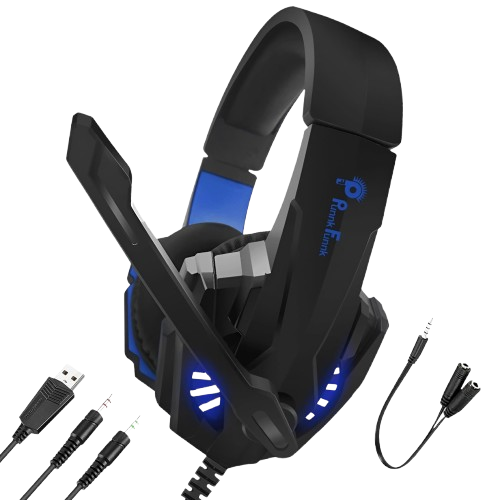
PF-DG404 Low-Power Cat 1 bis
Cost-optimized 10 Mbps cellular data stick designed specifically for smart metering, vending machines, and telemetry.
- Ultra-low Idle Power (<15mA)
- Linux / Android CDC-ECM
- SIM Lock Security Layer
2. Deep Engineering Analysis: Anatomy of a Non-Throttling 4G Cellular Modem
The primary point of failure for consumer-grade cellular modems in commercial deployment is thermal degradation. When a 4G data card dongle operates continuously under heavy packet load, the baseband modem and Power Amplifier (PA) generate substantial heat. In cheap, low-cost plastic modems, this heat causes baseband throttling, dropouts, or permanent chip failure.
PunnkFunnk addresses these structural engineering challenges through four key design rules:
| Engineering Parameter | Consumer-Grade Generic Dongles | PunnkFunnk Enterprise 4G Data Dongles |
|---|---|---|
| PCB Construction | 2-Layer Low-Density FR4 PCB | 4-Layer High-TG Copper PCB with Dedicated Heat Sink Thermal Vias |
| Thermal Management | No internal heatsink; passive air trap | Double-sided Phase-Change Thermal Pads + Aluminum Heat Spreader Shield |
| Antenna Design | Cheap Monopole PCB Trace Antennas | High-Efficiency 3D LDS (Laser Direct Structuring) + Dual TS-9 MISO Ports |
| Power Protection | Basic fuse; high risk of ESD damage | Integrated TVS Diode ESD Protection + Voltage Surge Suppressor (Up to 15kV) |
| Firmware Stability | Generic unmanaged Linux kernel | Industrial Watchdog Daemon, Self-Healing Connection Auto-Ping, TR-069 |
Cellular Band Matrix & Regional Frequency Configurations
Global logistics managers must ensure that cellular data card dongles ship with baseband configurations matched to target destination networks. Operating an incorrect band specification results in reduced cell tower negotiation speeds or total lack of signal (No Service). PunnkFunnk supplies three primary SKU band profiles:
- EMEA & APAC Band Profile (Model B1/B3/B5/B7/B8/B20/B28/B38/B40/B41): Optimized for Europe, Middle East, Africa, Southeast Asia, and India. Full compliance with Vodafone, Airtel, EE, Orange, and Jio networks.
- North American Band Profile (Model B2/B4/B5/B12/B13/B14/B66/B71): Tailored for AT&T, T-Mobile, and Verizon networks, featuring FirstNet Band 14 support for emergency/public safety hardware projects.
- LATAM & Global Band Profile (Model B1/B2/B3/B4/B5/B7/B8/B28): Designed for Latin American deployments (Claro, Telefonica/Movistar, TIM) with extended rural Band 28 coverage.
3. Future Sourcing & Technology Evolution Trends (2025–2030)
As cellular network architectures evolve, purchasing directors must align hardware procurement strategies with long-term infrastructure shifts. When procuring 4G Data Card Dongles over the next 5-year planning cycle, consider these four major shifts:
Trend 1: The Transition from Legacy 2G/3G Phase-Out to LTE Cat 1 bis
With telecommunications operators worldwide turning off 2G and 3G spectrum to re-farm bands for 4G and 5G, legacy M2M hardware is rapidly becoming obsolete. For low-bandwidth applications such as smart meters, asset trackers, and telemetry, LTE Cat 1 bis (single antenna 10Mbps) dongles are emerging as the ideal successor. They deliver significantly lower hardware cost and minimal power draw compared to full Cat 4 dongles while guaranteeing operational lifespan well into the 2030s.
Trend 2: Integrated eSIM (eUICC) Replacing Physical SIM Slots
Physical SIM cards represent a physical failure vector—contacts can oxidize in high-vibration or humid environments, and unauthorized personnel can tamper with or steal physical cards. Next-generation enterprise 4G data card dongles integrate SMD eSIMs (MFF2 package) directly onto the PCB. This allows remote over-the-air (OTA) provisioning of carrier profiles, enabling fleet managers to switch mobile network operators (MNOs) programmatically based on signal strength or localized data tariffs.
Trend 3: 5G RedCap vs. High-Stability 4G LTE Dongle Cost Dynamics
While 5G NR RedCap (Reduced Capability) technology promises high-efficiency connectivity for mid-tier devices, current 5G module BOM costs remain 3x to 4x higher than standard 4G LTE Cat 4 modems. For the majority of commercial use cases—such as digital signage, branch router failover, and ATM telemetry—4G Data Card Dongles offer superior ROI, mature carrier certifications, and lower thermal output for years to come.
Trend 4: AI-at-the-Edge Management & Remote Telemetry
Modern data card dongles are no longer simple pass-through modems. System integrators are demanding hardware equipped with onboard microcontrollers capable of running lightweight edge diagnostics. This includes automated carrier signal quality logging (RSRP, RSRQ, SINR), predictive link failure detection, and automatic hardware power cycling without host intervention.
Request a Custom B2B Quotation & Sample Evaluation Unit
Our engineering team responds within 12 hours with complete technical datasheets, regulatory compliance certificates, and volume pricing tiers.
Get Catalog4. Enterprise Manufacturing Standards & E-E-A-T Quality Assurance
At PunnkFunnk, we recognize that industrial buyers risk thousands of dollars in downtime if a deployed batch of cellular dongles fails in the field. Our manufacturing plant adheres strictly to ISO9001 quality management guidelines and IPC-A-610 Class 2 electronic assembly standards.
- 100% RF Sensitivity & Transmit Power Testing: Every individual dongle undergoes automated testing on Keysight/Agilent wireless test sets to ensure output power (23dBm ±2dB) meets global carrier standards.
- Thermal Chamber Stress Validation: Random samples from each production run are tested inside climate chambers under full packet load at 75°C ambient temperature for 72 hours continuously.
- Automated Optical Inspection (AOI): SMT lines utilize 3D AOI to eliminate cold solder joints, bridging, or misaligned SMD components.
- Full Batch Serialization & Traceability: Every device features a unique laser-etched IMEI and QR code linked to its raw material component batch history for immediate warranty tracking.

5. Sourcing Guide: Total Cost of Ownership (TCO) & Procurement Checklist
When comparing vendor quotes for bulk 4G Data Card Dongles, evaluating only the upfront unit cost can be misleading. Buyers should calculate Total Cost of Ownership based on the following framework:
- Carrier Certification Costs: Are the dongles pre-certified for major target networks (e.g., CE, FCC, RoHS, PTCRB)? Uncertified dongles can incur significant delay and compliance fees during regional deployment.
- Driver Compatibility & Operating System Support: Ensure the vendor supplies verified CDC-ECM, RNDIS, MBIM, and Serial NDIS drivers across Windows 10/11, Linux (Debian, Ubuntu, Yocto), Android, and macOS kernel updates.
- Private Labeling & Custom WebUI: For ISP and carrier distribution, PunnkFunnk offers laser logo printing, customized packaging inserts, pre-loaded carrier APNs, and white-labeled WebUI dashboard skins.
- Supply Chain & BOM Locking: Component substitution without notification is a common issue with low-cost suppliers. PunnkFunnk guarantees a minimum 3-year BOM lock on all enterprise SKUs, ensuring hardware specs remain consistent across multi-year reorders.