Procurement FAQ & Expert Technical Answers Frequently Asked Questions by Global Buyers & Sourcing Managers
Clear, detailed engineering answers to the most frequent technical, logistics, and quality assurance questions raised when sourcing Over Ear Gaming Headsets.
Why are 50mm neodymium drivers preferred over 40mm drivers in enterprise-grade over ear gaming headsets?
50mm neodymium magnet drivers offer a larger diaphragm surface area and higher acoustic air displacement capabilities compared to standard 40mm drivers. This increased volume displacement allows the acoustic chamber to achieve deeper low-frequency extension (down to 20Hz) with lower total harmonic distortion (THD < 1% at 1kHz). In gaming scenarios, this translates to crisp, non-fatiguing spatial audio where heavy bass explosions do not obscure subtler mid-range and high-frequency acoustic details like enemy footsteps or voice comms.
What latency benchmark should B2B buyers demand for wireless over ear gaming headsets?
For competitive FPS and esports applications, total audio-to-visual latency must remain below 25 milliseconds. Standard Bluetooth (A2DP profile) introduces latency ranging between 100ms and 220ms, which results in noticeable audio lag during fast-paced gameplay. PunnkFunnk's wireless gaming headsets utilize proprietary 2.4GHz RF wireless dongles with Nordic or Realtek chipsets to maintain sub-20ms ultra-low latency, matching the speed of wired connections while maintaining complete wireless freedom.
How does Environmental Noise Cancellation (ENC) differ from Active Noise Cancellation (ANC) in gaming headsets?
ANC (Active Noise Cancellation) utilizes internal and external microphones to pick up low-frequency ambient noise surrounding the listener (such as airplane engine hums) and generates anti-phase soundwaves to silence that noise for the wearer's ears. In contrast, ENC (Environmental Noise Cancellation) focuses specifically on the outbound microphone voice signal. It uses a dual-microphone array and a digital signal processor (DSP) to isolate the user's voice while filtering out up to 35dB of background room noise (keyboard clacks, room echo, nearby chatter) so that team members hear crystal-clear voice audio during online matches.
What acoustic and electrical safety certifications are required for importing over ear gaming headsets into North America and the EU?
Importing audio hardware into Tier-1 markets requires full regulatory compliance. For the European Union, products require CE certification (covering EMC Directive 2014/30/EU and Low Voltage Directive 2014/35/EU), RoHS 2.0 chemical restriction compliance, and REACH declaration. For North America, FCC ID certification is mandatory for all 2.4GHz and Bluetooth wireless transmitters. Additionally, internal rechargeable lithium-polymer batteries must possess UN38.3 transport testing, MSDS documentation, and IEC/EN 62368-1 sound pressure audio safety compliance to prevent ear damage caused by excessive sound pressure levels.
Can PunnkFunnk provide custom acoustic EQ curves, custom RGB lighting profiles, and private-label packaging for OEM contracts?
Yes. As a direct ODM/OEM manufacturer, PunnkFunnk provides full customization options for enterprise orders. Our acoustic engineers can tune the onboard DSP firmware to match your brand's specific sound signature (e.g., esports footstep boost curve, balanced studio monitor profile, or heavy bass curve). We also offer custom RGB LED lighting presets, custom headband laser etching, custom silkscreen logo application, and fully customized multi-language retail carton packaging.
How does headband structural engineering impact long-term RMA and return rates for retail distributors?
Mechanical headband failure—such as plastic cracking, clamping tension loss, and internal wire fatigue—is one of the leading causes of consumer returns in retail gaming audio. PunnkFunnk mitigates this risk by deploying manganese spring-steel inner headband flex strips encased in shatter-resistant PC/ABS alloy polymers. Every headband design is certified to withstand over 10,000 torsion and extension cycles without structural cracking or permanent deformation, dramatically reducing distributor RMA rates.
What is the typical Minimum Order Quantity (MOQ) and lead time for custom OEM Over Ear Gaming Headset orders?
Standard factory OEM orders with custom branding and customized retail packaging typically start at an MOQ of 1,000 units per SKU. Mass production lead times range between 25 to 35 days post-sample approval and deposit confirmation. For smaller pilot batches or standard PunnkFunnk branded inventory, flexible order quantities are available with rapid 7-day dispatch from our central logistics hubs.
How does PunnkFunnk ensure quality consistency across high-volume production runs?
We enforce an automated, multi-stage Quality Assurance (QA) protocol compliant with ISO9001 standards. Every raw driver element undergoes automated frequency curve screening before assembly. Assembled units pass through an automated anechoic chamber test bench to verify stereo phase consistency, microphone sensitivity, wireless signal strength, and charging IC efficiency. Every batch is traceable by serial number back to its specific production lot and raw material component batch.

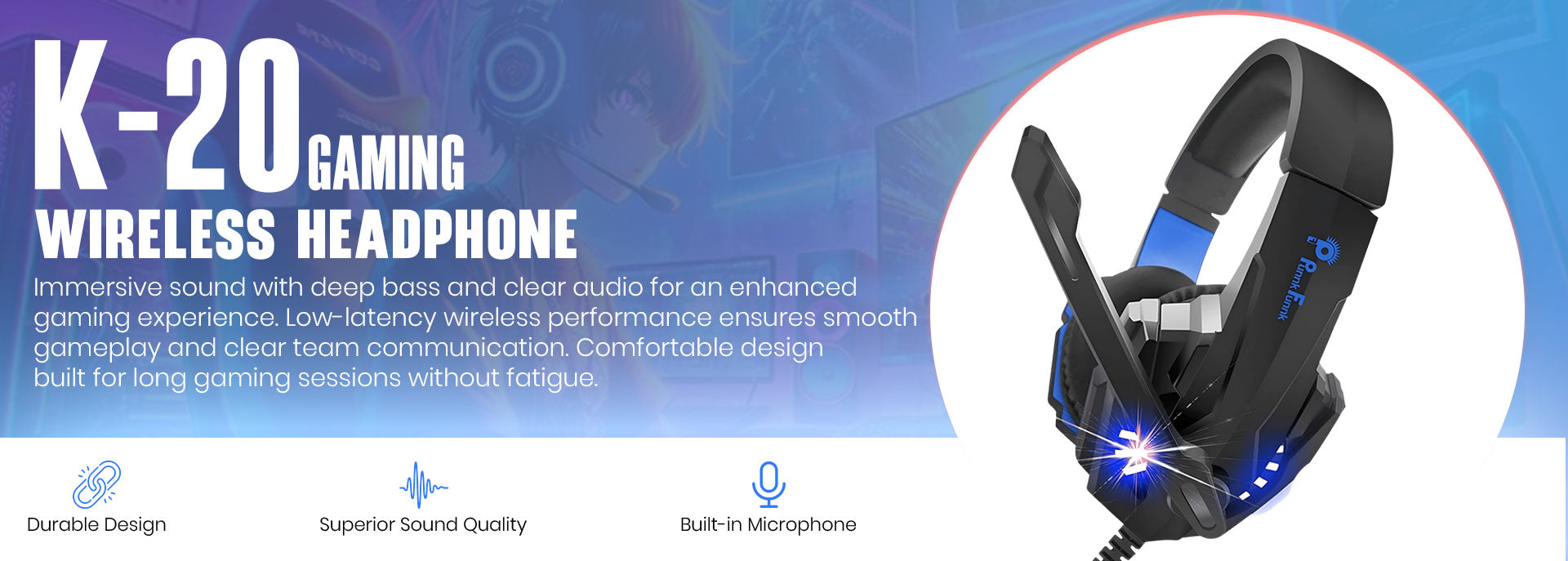
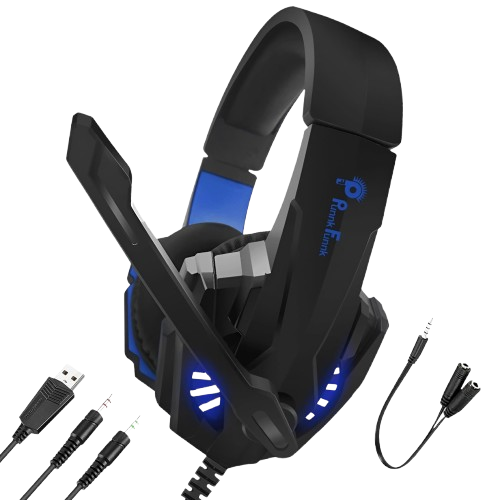
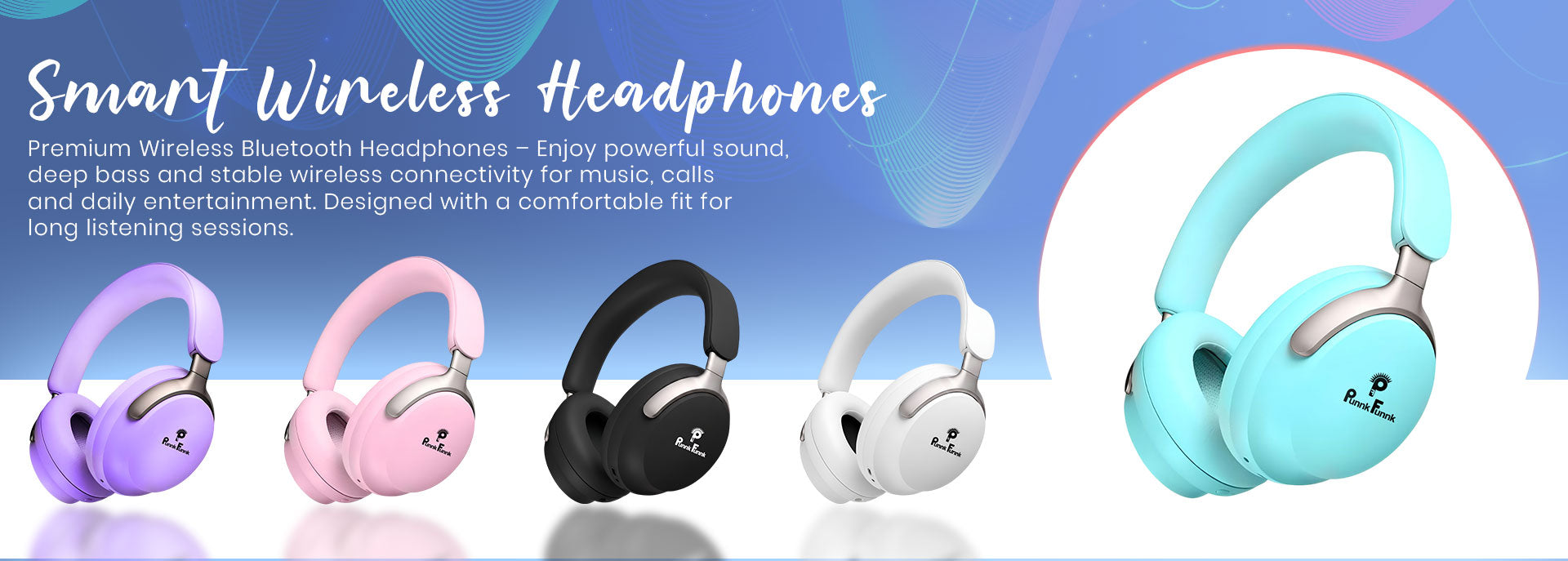
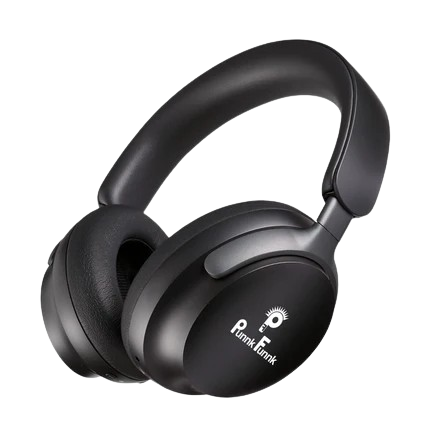

 50mm Neodymium Acoustic Drivers