Global Buyer's Technical Blueprint Sourcing Wireless Mini Karaoke Speakers: Engineering Analysis, OEM Procurement Trends & Quality Control Framework
A complete resource for consumer electronics buyers, sourcing executives, and retail channel managers evaluating portable karaoke acoustic hardware, wireless RF pairing protocols, and international compliance standards.
1. Decoding the Global Demand for Wireless Mini Karaoke Speakers
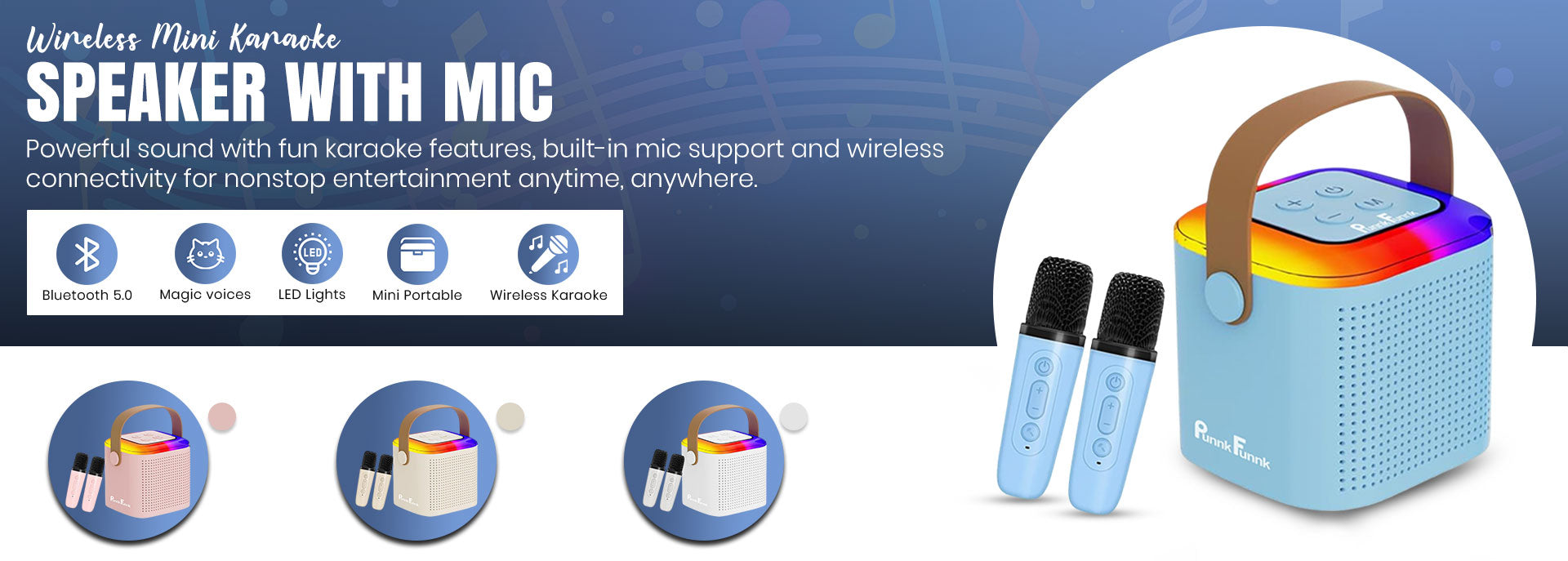
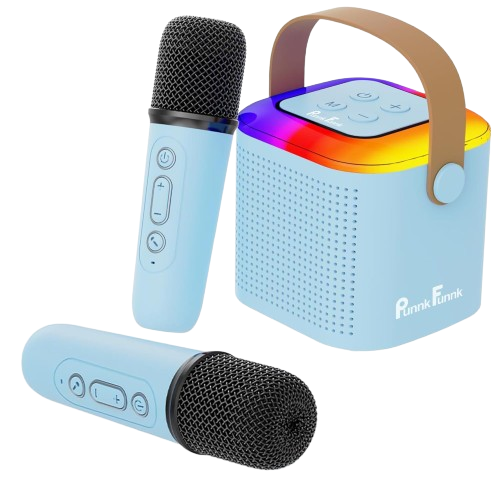
The market for the Wireless Mini Karaoke Speaker has experienced explosive expansion across North America, Western Europe, and Southeast Asia. What was historically a bulky, power-hungry living room appliance has been engineered into a compact, battery-powered lifestyle accessory. Today's global buyers—ranging from Amazon brand operators to multi-store consumer electronics retailers—are searching for products that combine true acoustic output, vocal clarity, multi-device connectivity, and visual appeal within a palm-sized footprint.
For procurement officers navigating AI-assisted sourcing platforms and supplier directories, identifying a reliable factory partner requires moving past basic surface aesthetics. Low-quality mini speakers suffer from severe acoustic distortion, microphonic feedback (howling), erratic 2.4GHz microphone disconnections, and uncertified lithium battery packs that create compliance barriers at regional customs. PunnkFunnk addresses these structural engineering challenges through disciplined BOM selection, in-house SMT circuit layout, and specialized DSP acoustic calibration.
2. Acoustic Architecture & Hardware BOM Standards
To achieve high-definition vocal amplification while streaming high-bitrate Bluetooth audio, a modern Wireless Mini Karaoke Speaker must balance thermal dissipation, acoustic back-pressure, and RF isolation. Below is the structural engineering breakdown implemented in PunnkFunnk's acoustic production lines:
| Hardware Component | Sub-Standard Market Tier (Low Cost) | PunnkFunnk Industrial Production Standard | Impact on Consumer Experience & RMA |
| Vocal DSP Chipset | Analogue op-amp with passive filter resistors | 32-bit Hardware DSP with active feedback suppression & magic pitch shift | Eliminates microphonic squeal; delivers rich reverb, voice change effects, and crisp vocal clarity. |
| Wireless Mic Transceiver | Analogue FM or high-latency BT audio bridge | Dedicated 2.4GHz digital ISM band link with sub-20ms latency | Prevents sync lag between vocal delivery and audio output, essential for comfortable singing performance. |
| Acoustic Driver & Passive Radiator | Paper-cone speaker with open back frame | Neodymium dual-magnet dynamic driver with damped rubber surround & passive bass radiator | Delivers deep low-end response (down to 65Hz) without cabinet vibration distortion at high volumes. |
| Battery Protection Circuit | Basic single-MOS protector without thermistor | Dual-IC protective board with NTC thermal sensors & flame-retardant ABS bracket | Prevents cell degradation, over-charging, short circuits, and ensures full UN38.3 air transport approval. |
| Bluetooth Chipset | Legacy Bluetooth 4.2 / 5.0 SOC | Bluetooth 5.3 + EDR with dual-device TWS stereo pairing support | Extended wireless range (15m+), faster reconnection, lower power consumption, and zero dropouts. |
3. Global Sourcing Trends & Technological Roadmap (2025–2030)
As search engines and AI product discovery assistants analyze buyer intent, procurement managers are asking more sophisticated questions regarding long-term manufacturing viability and tech evolution. Based on PunnkFunnk's R&D engineering insights, five major hardware trends will redefine the Wireless Mini Karaoke Speaker product category over the next three to five years:
Trend 1: AI-Powered Real-Time Vocal Isolation & Music Extraction
Traditional mini karaoke systems rely on basic central-channel frequency cancellation to diminish vocal tracks in standard songs. Next-generation models are transitioning to embedded AI neural audio processors. These edge-AI microcontrollers isolate lead vocals from any standard audio stream in real-time without introducing phase artifacts or dulling instrumental backing tracks. Brand owners who incorporate AI vocal removal in their OEM SKUs will gain a distinct competitive edge in retail channels.
Trend 2: Transition from Proprietary 2.4GHz RF to Bluetooth LE Audio (LC3 Codec)
While current high-performance mini karaoke sets utilize proprietary 2.4GHz wireless chips for microphone transmission to avoid latency, the adoption of Bluetooth LE Audio and the LC3 (Low Complexity Communication Codec) is revolutionizing the industry. LC3 offers high acoustic fidelity at half the data rate, allowing simultaneous, ultra-low-latency transmission for multiple wireless microphones while consuming 40% less battery power.
Trend 3: Environmental Sustainability & Eco-Compliant Materials
Regulatory frameworks, such as the EU Sustainable Products Directive and revised battery recycling mandates, require brand owners to examine their supply chain footprint. Leading factories are now incorporating post-consumer recycled (PCR) plastics into speaker cabinets, adopting soy-based ink printing on packaging, and utilizing modular battery assemblies that permit safe battery removal and recycling at end-of-life.
Trend 4: Smart LED Lighting Systems with Custom App Integration
Visual presentation continues to drive consumer purchasing decisions on platforms like TikTok Shop and Amazon. Basic single-color flashing LEDs are being rapidly replaced by addressable RGB ICs capable of rendering 16.8 million colors. Modern mini karaoke hardware includes onboard microcontrollers synced to the music spectrum, with customizable lighting presets accessible via companion smartphone apps.
Trend 5: Multi-Speaker Mesh Interconnectability (Party-Sync Technology)
Consumers increasingly expect small hardware to operate as part of a broader sound ecosystem. Broadcast audio protocols allow a single master phone or microphone input to broadcast synchronization commands to dozens of nearby mini karaoke units simultaneously. This feature transforms individual mini speakers into synchronized spatial audio clusters for outdoor gatherings and school events.

Export-Grade Protective Packaging
Reinforced double-wall corrugated master cartons engineered with high-density EPE foam cushions prevent transit damage during international ocean freight and courier delivery.

Direct Factory RMA & Spare Parts
We provide 1% complimentary spare units or mainboard/microphone replacement kits with volume OEM orders to support localized customer warranty fulfillment.

Intellectual Property Safeguards
All OEM artwork, custom tooling molds, and proprietary firmware code are protected under strict non-disclosure agreements (NDAs) to safeguard your brand's market exclusivity.