Why should global buyers choose 2.4GHz 300Mbps WiFi Range Extenders over expensive Wi-Fi 6 mesh setups for bulk retail?
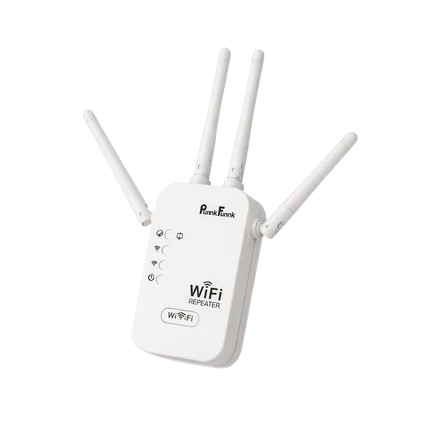
While Wi-Fi 6 and Wi-Fi 7 dominate flagship technology news, 2.4GHz 300Mbps WiFi Range Extenders remain the volume market leader across global retail channels, ISP customer premises equipment (CPE) bundles, and e-commerce platforms. The primary driver is physics: the 2.4GHz radio frequency spectrum possesses superior signal penetration through concrete walls, solid doors, and structural obstacles compared to 5GHz or 6GHz bands.
For budget-conscious consumers, home office setups, smart home IoT device bridging (such as outdoor IP security cameras, smart doorbells, and smart plugs), and hospitality environments, 300Mbps N-standard repeaters offer an optimal price-to-performance ratio with zero setup friction. From a commercial standpoint, 300Mbps extenders provide distributors with an accessible price point, high inventory turn rates, and healthy profit margins that expensive mesh systems cannot match in mass-market demographics.
What OEM/ODM customization options are available for bulk WiFi Range Extender orders?
PunnkFunnk provides full-spectrum OEM and ODM customization for B2B procurement partners. Our factory capabilities encompass:
- Industrial Design & Casing: Custom housing colors, metallic foil hot-stamping, silkscreen/pad printing logo placement, and laser-etched compliance markings.
- AC Plug Adaptations: Interchangeable or region-specific EU (Type C/F), US (Type A/B), UK (Type G), and AU (Type I) plug pin structures meeting localized electrical safety norms.
- Firmware & Software UI: Customized WebUI domain login URLs (e.g., setup.yourbrand.com), customized default SSIDs, pre-loaded splash screen logo graphics, multi-language localized setup wizards, and default admin credentials.
- Network Management Protocols: Optional TR-069 / TR-181 remote management protocol integration for Internet Service Provider (ISP) network operator deployment.
- Retail Packaging: Custom artwork printed on 350g reinforced corrugated color boxes, eco-friendly soy ink printing, molded inner trays, custom blister packs, and multi-language user manuals.
How does PunnkFunnk ensure long-term BOM stability and prevent component swapping?
A frequent frustration for B2B buyers working with tier-2 suppliers is silent component substitution—where a manufacturer replaces a premium network processor or flash chip with a lower-grade alternative in subsequent production runs to boost their own margin. This often leads to unexplained field failures, altered RF output, and increased customer return rates.
PunnkFunnk guarantees strict Bill of Materials (BOM) locking agreements within our purchasing contracts. Once a golden sample is audited and approved by your technical team, every single component—from the primary MediaTek or Realtek SoC down to the crystal oscillators, low-noise amplifiers, and passive capacitors—is registered in our ERP system. Any proposed engineering change order (ECO) requires formal written authorization from the buyer. Every batch undergoes automated optical inspection (AOI) and surface mount technology (SMT) validation to ensure absolute continuity.
What is the real-world throughput efficiency of a 300Mbps 2.4GHz wireless repeater?
In wireless networking terminology, 300Mbps represents the theoretical Physical Layer (PHY) data rate utilizing 2T2R MIMO (2 Transmit, 2 Receive channels) at 40MHz channel bandwidth under ideal laboratory shielding conditions. In real-world consumer deployments, actual application throughput over TCP/IP protocols typically ranges between 90Mbps to 140Mbps.
This difference is caused by necessary 802.11 protocol frame overhead, wireless encryption processing, ambient RF interference from neighboring Wi-Fi networks, and half-duplex retransmission overhead inherent to single-radio repeater mode. When the device is switched to Access Point (AP) mode via its integrated Fast Ethernet RJ45 port, throughput achieves physical wire-speed performance up to 100Mbps (saturating the Fast Ethernet port link). Providing transparent throughput expectations in your retail marketing reduces user confusion and yields higher customer satisfaction scores.
How do PunnkFunnk WiFi Range Extenders resolve double-NAT and IP conflict issues?
Double Network Address Translation (double-NAT) occurs when a secondary router or misconfigured repeater creates a separate subnet, isolating devices behind it and breaking local network discovery for smart TVs, media servers, and online gaming consoles. It can also lead to dynamic IP address collisions if the extender attempts to issue DHCP addresses on the host network.
PunnkFunnk’s custom-engineered firmware solves this by deploying intelligent Layer-2 MAC address transparent bridging when operating in Repeater mode. The range extender disables its own internal DHCP server upon establishing a handshake with the host router, allowing the main router to maintain single-table IP address distribution. Requests are passed transparently without modifying IP headers, ensuring seamless peer-to-peer connectivity, effortless airplay/chromecast casting, and hassle-free smart home device pairing.
What compliance certifications do PunnkFunnk WiFi Range Extenders carry for international import?
Importing wireless radio hardware requires strict adherence to regional electromagnetic compatibility (EMC), radio frequency spectrum (RF), and electrical safety standards. PunnkFunnk maintains an active database of compliance documentation for our connectivity hardware line:
- European Union (CE / RED Directive): Full EN 300 328 (RF), EN 301 489 (EMC), EN 62368-1 (LVD Electrical Safety), and EN 62311 (EMF Human Exposure) testing reports. RoHS 10-substance chemical compliance and WEEE registration readiness.
- United States (FCC Part 15B / 15C): Certified FCC ID grants verifying authorized output power levels within statutory EIRP limits to prevent interference on ISM bands.
- International Safety: V0 self-extinguishing housing plastic material testing, plug pin insertion force safety tests, and surge protection up to 2KV for high-grid-fluctuation regions.
All laboratory test reports are issued by accredited international testing bodies (such as SGS, TUV, or Intertek) and are supplied directly to B2B clients to ensure smooth customs clearance.
How does thermal design affect the lifespan and stability of wall-plug WiFi repeaters?
Because wall-plug WiFi range extenders operate continuously inside small, enclosed plastic bodies plugged directly into wall outlets, thermal management is the single most critical factor determining hardware reliability. Excess internal heat buildup causes CPU thermal throttling (resulting in sudden speed drops), signal jitter, memory freeze bugs requiring hard reboots, and premature degradation of electrolytic capacitors.
PunnkFunnk engineers resolve thermal bottlenecks through a multi-tiered passive cooling strategy. First, we attach high-thermal-conductivity aluminum heat-spreader plates directly to the core SoC and RF power amplifiers via silicone thermal pads. Second, our housing CAD design incorporates engineered 360-degree passive convection airflow channels along the bottom, sides, and upper housing rim. Cool air is drawn in from the base and heated air is vented at the top naturally without requiring noisy mechanical fans. This keeps core silicon temperatures well below 45°C under continuous 100% data throughput testing, ensuring a extended service life exceeding 36 months.
What is the minimum order quantity (MOQ) and production lead time for factory-direct orders?
To accommodate both expanding regional distributors and established global brands, PunnkFunnk offers flexible order structures:
- Neutral Standard Packaging: MOQ starting at 500 units for standard inventory configurations, ideal for market testing and quick-ship fulfillment within 7 working days.
- OEM Custom Branding: Standard OEM MOQ starts at 2,000 units per artwork SKU. This includes full custom box printing, branded casing silkscreen, and custom firmware UI initialization. Lead time for first OEM orders is typically 20–25 days following artwork sign-off and deposit receipt.
- ODM Full Customization: For custom tooling, unique casing molds, or dedicated PCBA redesigns, project schedules are established with clear milestone tracking (CAD design, 3D rapid prototyping, tooling fabrication, T1 sample run, pre-production audit).


 Realtek & MediaTek Chipsets