0%

Wireless Bluetooth Earbuds have moved from convenient accessories to daily communication tools. In 2026, global buyers will compare more than sound quality. They will examine battery endurance, microphone clarity, comfort, repair support, privacy features, and regional warranty coverage. A quiet morning commute can expose weak noise cancellation. A windy video call can reveal poor microphone tuning.

Industry data supports this growing importance. Bluetooth SIG’s 2024 Market Update projected annual Bluetooth device shipments could reach 7.0 billion by 2028, showing the technology’s expanding role across consumer electronics. IDC’s Worldwide Quarterly Wearable Device Tracker also places hearables among the strongest and most established wearable categories. Meanwhile, Counterpoint Research and Canalys continue tracking intense competition in the true wireless stereo market, with premium, mid-range, and value products serving different global needs.

This guide evaluates the 2026 market through practical buying criteria. We consider codec support, Bluetooth version, active noise cancellation, transparency performance, charging-case capacity, and long-term software updates. Independent testing matters. Manufacturer claims do not always match crowded trains, humid streets, or weak mobile signals. Some “all-day” models perform closer to six hours in real use. That difference matters.

No single pair suits every listener. A frequent traveler may value stable multipoint connections, while a fitness user may prioritize secure fit and sweat resistance. Regional availability can also change the final decision. The best Wireless Bluetooth Earbuds balance measurable performance, dependable ownership, and honest limitations for buyers worldwide.
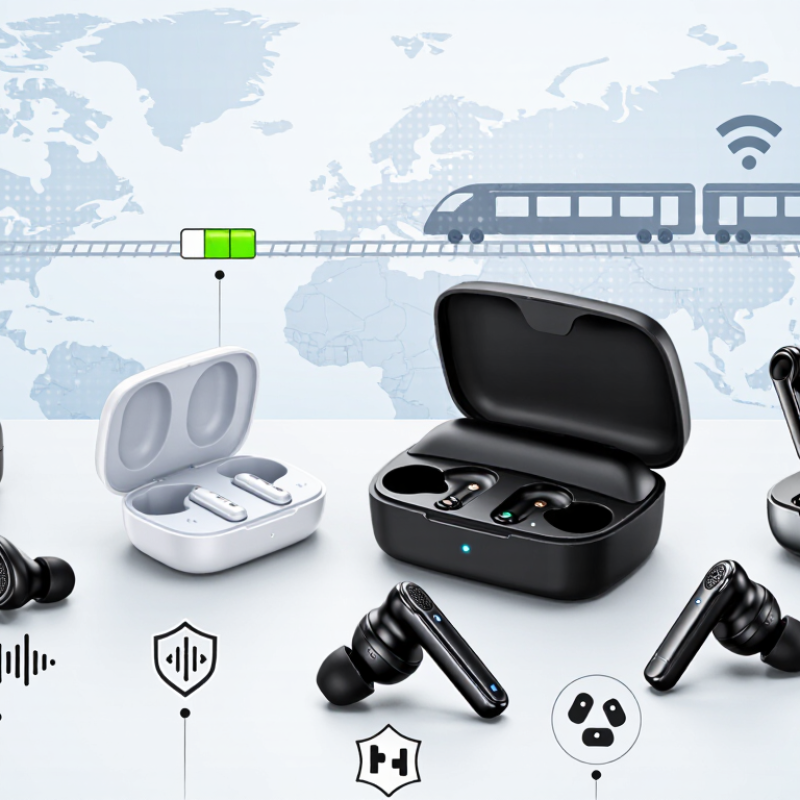
2026 Best Wireless Bluetooth Earbuds for Global Buyers

What Wireless Bluetooth Earbuds Are and Why They Matter in 2026

Wireless Bluetooth earbuds are compact audio devices that connect to phones, tablets, and computers without a cable. They use short-range radio signals to transmit music, calls, and other sounds. Each earbud contains a small speaker, battery, microphone, and control system. A charging case stores power between listening sessions. Unlike wired models, they leave pockets and hands uncluttered. That freedom matters during commuting, exercise, travel, and remote work.

In 2026, wireless earbuds matter because daily audio is becoming more mobile and personal. Newer Bluetooth standards can improve connection stability, power use, and device switching. Some models support clearer call processing, adaptive noise control, and low-latency audio for video. These features are useful, but specifications can sound better than real performance. Battery estimates also change with volume, temperature, and noise cancellation. Fit remains critical. A poor seal can weaken bass and reduce noise isolation, regardless of price.

In practical comparisons, comfort often beats a longer feature list. Earbuds should stay secure while walking, yet avoid painful pressure after an hour. Microphone quality should be tested near traffic, not only in a quiet room. Water resistance helps with sweat, but it does not make every model suitable for swimming. Charging ports, case size, language support, and regional warranty access also affect global buyers. I sometimes overvalue advanced controls, then ignore how often I actually use them. Real use exposes those mistakes.

How to Compare Sound Quality, Comfort, Battery Life, and Connectivity

When comparing wireless Bluetooth earbuds, start with sound quality in real listening conditions. Use familiar tracks with clear vocals, deep bass, and busy cymbals. Listen at low volume. Voices should remain natural, not sharp or distant. Bass should feel controlled rather than swollen. A quiet room can hide weaknesses, so test them near traffic or office conversations. Equalizer settings can help, but heavy adjustments may reveal poor tuning. I once preferred a less exciting sound because it caused less fatigue during long work sessions.

Comfort depends on more than weight. Ear tips should seal gently without creating pressure after thirty minutes. Walk, bend, and make a phone call before deciding. Fit matters more. Sweat resistance is useful for commuting or light exercise, but it does not guarantee protection in every situation. Ear shapes vary, so online reviews cannot replace personal testing.

Battery claims need careful interpretation. Real playback may drop when noise control, high volume, or frequent calls are active. Check both earbud endurance and charging-case capacity. Connectivity should reconnect quickly and remain stable through walls or crowded public spaces. Support for modern Bluetooth features can reduce delay, but device compatibility still matters. Multipoint switching sounds convenient, yet some systems behave inconsistently between a laptop and phone. That weakness deserves attention. Test calls in a windy street, not only indoors. Reliable microphones should keep speech understandable without making you repeat every sentence.

2026 Best Wireless Bluetooth Earbuds for Global Buyers - How to Compare Sound Quality, Comfort, Battery Life, and Connectivity

A brand-neutral comparison of common true wireless earbud profiles for different listening priorities and travel conditions.

Earbud Profile Best For Sound Quality Active Noise Cancellation Comfort & Fit Battery Life Connectivity Durability Typical Weight Recommended Priority
Balanced All-Rounder Daily commuting, calls, music, and mixed travel Neutral-to-warm tuning; clear vocals; adjustable EQ; AAC or equivalent high-quality Bluetooth audio Strong reduction of aircraft, rail, and office noise; transparency mode recommended Usually includes three to four ear-tip sizes; secure fit without excessive pressure About 6–8 hours per charge; approximately 24–32 hours with the case Bluetooth 5.2 or newer; stable multipoint is a useful advantage IPX4 to IPX5 water resistance is common Approximately 4.5–6.5 g per earbud Best overall balance of sound, comfort, battery, and price
Travel Noise-Cancelling Frequent flights, trains, hotels, and open-plan offices Full low frequencies with detailed speech; performance depends strongly on ear-tip seal Very strong low-frequency reduction; adaptive ANC can respond to changing environments Comfortable for long sessions when the shell is compact and the tips seal without deep insertion About 5–8 hours with ANC; approximately 20–30 hours including the case Bluetooth 5.2 or newer; multipoint and low-latency modes improve travel flexibility IPX4 or IPX5 is preferable; charging cases are generally not water resistant Approximately 5–7 g per earbud Choose the best seal and ANC performance rather than the highest advertised battery figure
Audiophile-Focused Critical listening, acoustic music, jazz, classical, and high-quality streaming Wider perceived stage, controlled bass, refined treble, and support for higher-quality codecs where compatible Moderate to strong ANC; sound consistency and seal are more important than maximum cancellation Fit should remain stable while preserving an open, non-fatiguing presentation About 5–7 hours per charge; approximately 20–28 hours with the case Bluetooth 5.2 or newer; codec support must match the phone or music player IPX4 is adequate for normal use; avoid heavy rain and intense workouts Approximately 4–7 g per earbud Prioritize tuning, distortion control, EQ quality, and codec compatibility
Sports and Outdoor Running, gym training, cycling, and outdoor exercise Energetic bass and clear rhythm; an adjustable EQ helps compensate for outdoor noise Often moderate ANC or ambient-aware listening; full isolation may be unsuitable near traffic Ear fins, wing tips, or a shaped shell can improve stability during movement About 6–10 hours per charge; approximately 24–40 hours with the case Bluetooth 5.2 or newer; low-latency performance helps with workout videos IPX5 to IPX7 offers better protection from sweat and water; ratings do not guarantee seawater resistance Approximately 5–8 g per earbud Fit security and sweat resistance matter more than premium codec support
Long-Battery Work Model Long workdays, online meetings, study, and frequent phone calls Speech-forward tuning with clear mids; microphones should maintain intelligibility in moderate noise Moderate ANC is usually sufficient for office and home environments Low-pressure fit and breathable ear tips are essential for extended wear About 8–12 hours per charge; approximately 32–50 hours with the case Multipoint, reliable microphone switching, and Bluetooth 5.2 or newer are valuable IPX4 is generally adequate for office use and light perspiration Approximately 4–7 g per earbud Choose comfort, call quality, and real-world battery life over maximum volume
Compact and Lightweight Small ears, sleep-adjacent use, commuting, and users sensitive to ear pressure Balanced sound from small drivers; bass response depends heavily on the seal Basic to moderate ANC; smaller housings may provide less microphone and battery capacity Small shell, low profile, and multiple tip sizes; comfort varies substantially by ear shape About 4–7 hours per charge; approximately 16–28 hours with the case Bluetooth 5.2 or newer; stable everyday range is typically about 8–10 m indoors IPX4 is common; select a higher rating for regular workouts Approximately 3.5–5 g per earbud Best choice when low weight and unobtrusive fit are the main requirements
Sound Quality Check

Compare vocal clarity, bass control, treble smoothness, distortion, EQ options, and codec compatibility rather than relying only on driver size.

Battery Check

Advertised figures are normally measured with specific settings. ANC, high volume, calls, and codec choice can reduce actual playback time.

Connectivity Check

Bluetooth version alone does not guarantee better performance. Check multipoint support, codec matching, call stability, and device compatibility.

Comfort Check

A correct ear-tip seal improves bass, ANC, and call performance. Ear shape is highly individual, so replaceable tips are valuable.

Note: Values are representative ranges for widely available true wireless earbuds in the 2026 global market. Actual performance varies with firmware, volume, codec, ANC mode, temperature, device compatibility, and fit.

Which Earbud Features Fit Different Buyers and Listening Habits

For global buyers in 2026, the best wireless Bluetooth earbuds depend on daily listening habits, not advertised specifications alone. A commuter may need strong noise reduction for trains, while an office worker may prefer a clear transparency mode. Check microphone performance during outdoor calls. Wind can expose weaknesses quickly.

Tips: Choose secure ear tips for exercise, low-latency mode for video, and multipoint pairing for work devices. Test battery claims at moderate volume. Small details matter.

Listeners who enjoy long podcasts should prioritize comfort, balanced sound, and physical controls. People with smaller ears may need lighter housings and several tip sizes. Bass-heavy tuning can make music exciting, but it may hide speech or acoustic instruments. That choice is personal, and sometimes uncomfortable after an hour. For travelers, stable Bluetooth connections and a compact charging case deserve attention. Water resistance helps with sweat, but it does not always protect against heavy rain or careless washing. Check the rating and use case carefully. Global buyers should also confirm charging compatibility, warranty access, and app support in their region. Specifications look precise. Real use is messier.

How Compatibility, Regional Standards, and Pricing Affect Global Choices

Choosing the best wireless Bluetooth earbuds for global buyers requires more than comparing battery life and sound quality. Compatibility can vary between phones, operating systems, and Bluetooth versions. Most modern earbuds pair widely, but advanced features may not. Spatial audio, multipoint connections, and low-latency modes often depend on device support and software access.

Regional standards also deserve close attention. Wireless products may need local certification, approved radio frequencies, and compliant charging equipment. Bluetooth itself is broadly standardized, yet regional approval labels can affect legal sale and warranty service. Check the seller’s documentation before ordering. Also confirm the charging plug, language options, replacement parts, and return address. Small details matter. A cheaper international listing may provide limited support locally.

Pricing is equally complicated. The displayed price may exclude VAT, customs processing, or delivery fees. Currency changes can quietly increase the final cost. In my comparisons, a slightly more expensive local product sometimes offered faster returns and clearer warranty terms. That assumption failed for one purchase, because the local warranty covered defects but excluded battery wear. Buyers should compare total ownership cost, not only the checkout figure. Sound preferences also complicate value: a model with strong bass may disappoint someone who listens to podcasts in a noisy train. Personal testing remains useful, although online reviews can reveal patterns that one short listening session misses.

How to Select, Use, and Maintain Wireless Bluetooth Earbuds Safely

For global buyers, safe earbud selection begins with fit, not appearance. Choose a stable, comfortable seal that does not create pressure after thirty minutes. Different ear tips can change comfort and sound greatly. Check the product’s charging safety information, water-resistance limits, and supported Bluetooth version. Reliable sellers should provide clear specifications, warranty terms, and user instructions. Avoid listings with vague battery claims or missing safety details.

Keep listening levels moderate, especially in quiet rooms where loud sound feels less obvious. Take short breaks during long journeys or work sessions. If speech sounds muffled afterward, reduce the volume and rest your ears. Use transparency or ambient mode near roads, stations, and busy walkways. Never depend on earbuds to block every environmental warning. I once increased the volume on a flight and noticed ringing later. That was a poor choice.

Clean the ear tips and charging contacts with a dry, soft cloth. Do not push liquid into the speaker openings. Let damp earbuds dry naturally before charging. Store them in their case, away from heat, dust, and direct sunlight. Keep the case battery charged, but use the supplied cable or a compatible certified charger. Review paired devices regularly and remove unfamiliar connections. My routine is not perfect; I sometimes forget to clean the case. A weekly reminder helps. Replace damaged cables, swollen batteries, or cracked housings instead of continuing to use them.

FAQS

Do wireless Bluetooth earbuds work with every phone and operating system?

Most modern earbuds pair broadly, but advanced features may require specific devices or software. Check compatibility before buying.

Which features may not work across all devices?

Spatial audio, multipoint connections, and low-latency modes often depend on device support. Basic audio may still work.

What regional details should global buyers verify?

Check local certification, approved radio frequencies, charging plugs, language options, replacement parts, and return addresses. Small details matter.

Why can a cheaper international listing cost more later?

VAT, customs processing, delivery fees, and currency changes may increase the final price. Warranty support may also be limited locally.

How should buyers compare pricing fairly?

Compare the total ownership cost, not only the checkout figure. A local option may offer faster returns, but its warranty might exclude battery wear.

What fit should comfortable earbuds provide?

Choose a stable seal without pressure after thirty minutes. Try different ear tips because they can change comfort and sound.

How can users protect their hearing?

Keep volume moderate and take short breaks. If speech sounds muffled afterward, lower the volume and rest your ears.

When should transparency or ambient mode be used?

Use it near roads, stations, and busy walkways. Never assume earbuds block every warning. That assumption can fail quickly.

How should wireless earbuds and charging contacts be cleaned?

Use a dry, soft cloth. Keep liquid away from speaker openings, and let damp earbuds dry naturally before charging.

When should earbuds or accessories be replaced?

Replace damaged cables, swollen batteries, or cracked housings. Do not continue using visibly damaged parts. My cleaning routine is not perfect, either.

Conclusion

This guide explains what Wireless Bluetooth Earbuds are and why they have become an important choice for modern listening in 2026. It outlines how wireless earbuds connect to devices and compares the factors that most affect everyday satisfaction, including sound quality, wearing comfort, battery life, connection stability, microphone performance, and control options. Readers will also learn how different designs and features suit commuters, travelers, remote workers, fitness users, and casual listeners with varied habits.

The article further explores how device compatibility, regional wireless standards, charging requirements, warranty support, and pricing can influence purchases for buyers around the world. It provides practical advice for selecting the right earbuds, pairing and using them efficiently, protecting hearing through safe listening levels, keeping them clean, and maintaining batteries and charging cases. By balancing personal needs, technical features, comfort, reliability, and long-term value, global buyers can make a more informed and responsible choice.

Evelyn

Evelyn

Evelyn is a dedicated marketing professional with a deep understanding of the company’s products, customers, and evolving market needs. With a strong combination of strategic thinking, industry knowledge, and clear communication skills, Evelyn is responsible for creating informative and engaging......