Engineered smart wearables, audio & connectivity hardware — explore the new technology

Verified production models featuring hybrid active noise cancellation, low-latency DSP chipsets, multi-mic ENC algorithms, and customized acoustics for global distributors.
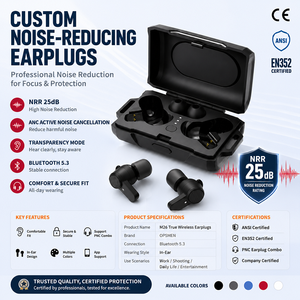
Engineered for shooting, hunting, and industrial safety compliance. Features sub-millisecond sound compression alongside dynamic ANC for high-noise environments.
Contact Us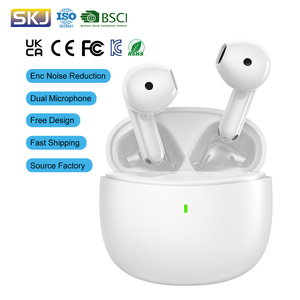
Equipped with ultra-low latency gaming engine, dual beamforming ENC microphones for crystal-clear team chat, and ergonomic moisture-proof acoustic cavity.
Contact Us
Tailored for European audio standards. Features titanium-diaphragm dynamic drivers, customized EQ presets, and extended battery endurance case.
Contact Us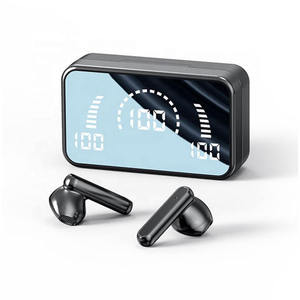
High-volume turnkey solution optimized for cross-border e-commerce brands. Features universal Bluetooth compatibility and reinforced sweat-proof housing.
Contact Us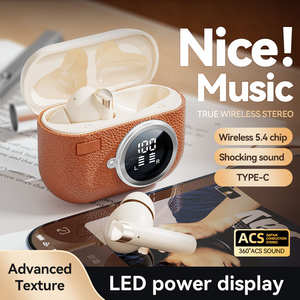
Next-generation Bluetooth 5.4 platform with accurate digital battery readout, deep hybrid active noise reduction, and power-efficient audio stream processing.
Contact Us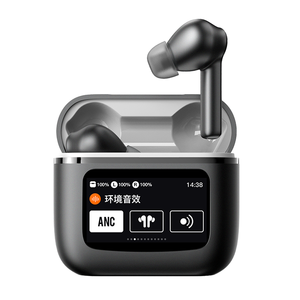
Innovative charging case integrated with interactive touch screen UI. Allows volume control, track switching, noise-canceling mode selection, and phone locator.
Contact Us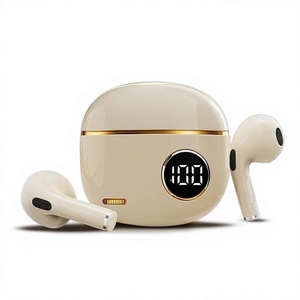
Combines pressure-free semi-in-ear wearability with high-efficiency noise management. IPX6 water resistance guards against heavy sweat and outdoor elements.
Contact Us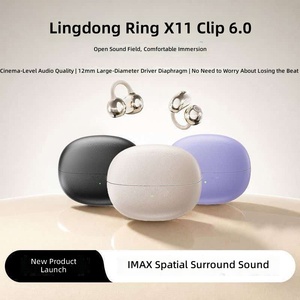
Non-in-ear audio innovation preventing ear canal fatigue. Uses directional sound conduction with active ambient noise suppression for outdoor runners.
Contact UsThe global True Wireless Stereo (TWS) market has shifted decisively toward Active Noise Cancellation (ANC) as a baseline consumer expectation rather than a premium luxury feature. As hardware specifications converge, global brand managers, regional distributors, and e-commerce importers face an increasingly complex procurement environment in China. Sourcing high-quality ANC earbuds requires evaluating acoustic engineering depth, digital signal processor (DSP) integration, radio frequency (RF) stability, and factory-level quality control frameworks.
China's Guangdong province—specifically the industrial clusters in Shenzhen, Dongguan, and Huizhou—accounts for over 80% of global TWS audio production. However, capabilities vary dramatically across factories. Tier-1 original design manufacturers (ODMs) utilize cleanroom assembly lines with automated Surface Mount Technology (SMT) and automated optical inspection (AOI), while lower-tier assemblers rely on manual soldering and inconsistent acoustic matching. Understanding these manufacturing nuances is critical to avoiding high return rates (RMA), battery failures, and sub-par active noise reduction performance.
Effective ANC performance depends on the precise acoustic alignment between internal microphone placement, sound cavity volume, and DSP algorithm calibration. A factory offering cheap off-the-shelf enclosures without anechoic chamber testing capability will inevitably deliver acoustic asymmetry and poor noise reduction bandwidth.
We combine in-house acoustic design with rigorous SMT verification and batch traceability to supply top-tier international audio brands.
Every batch goes through automated SMT AOI inspection, precision RF/GPS signal calibration, 48-hour continuous burn-in/battery cycling, IPX water-ingress testing, and a final packed-unit audit at AQL 1.0 standard.
Our audio engineers utilize AP (Audio Precision) analyzers and artificial head simulators to calibrate ANC attenuation curves up to -45dB, tuning frequency responses across 20Hz–20kHz for pristine low-distortion Hi-Fi audio output.
We assign individual batch-serial mapping to every production unit. Online serial registration enables automated firmware notifications, quick RMA claim validation, and stock warranty coverage extension for distributors.
B2B buyers must anticipate technology roadmaps to prevent inventory obsolescence. The TWS market is rapidly evolving beyond basic noise suppression into multi-modal intelligent sound processing. When auditing Chinese ANC suppliers, procurement teams should evaluate factory roadmaps against five key technological trends:
Feedforward ANC (microphones placed outside the earbud) and Feedback ANC (microphones placed inside the acoustic nozzle) are combining into Hybrid ANC architectures. Modern chipsets (such as Bestechnic BES2700 series, Realtek RTL8773, and Qualcomm QCC5180) enable real-time adaptive noise cancellation. These systems automatically adjust noise cancellation depth (-25dB to -48dB) based on ambient acoustic analysis, reducing user ear-pressure fatigue during long flights or office wear.
Bluetooth 5.4 with Low Energy (LE) Audio support is replacing legacy Bluetooth 5.0/5.2 designs. LE Audio introduces the LC3 (Low Complexity Communication Codec), which delivers superior audio fidelity at half the bit rate of traditional SBC. This technological shift directly increases battery longevity while reducing audio streaming latency below 30ms—essential for gaming-oriented ANC models.
Open-Ear Wearable Stereo (OWS) designs are expanding rapidly. While traditional in-ear silicone tips create passive isolation, OWS uses reverse-phase directional acoustics to beam audio into the ear canal without blocking surrounding environmental sounds. Factories developing OWS with Environmental Noise Cancellation (ENC) for voice calls represent a major growth vector for sports and active-lifestyle brands.
Smart charging cases with integrated color touch screens allow users to alter EQ settings, select noise-cancellation profiles, receive text notifications, and locate misplaced earbuds without pulling out their smartphones. Sourcing partners must ensure suppliers possess embedded software programming teams to handle touch-screen GUI firmware stability.
Tier-1 retail buyers in North America and Western Europe increasingly require compliance with Post-Consumer Recycled (PCR) plastics standards (25% to 50% recycled PC/ABS enclosure materials), halogen-free PCB designs, and plastic-free soy-ink packaging. Chinese factories with ISO 14001 certification and verified green supply chains hold a distinct market advantage.
Use this benchmark guide to evaluate component selection, manufacturing complexity, and target unit economics during supplier discussions.
| Architecture Class | Primary DSP Chipsets | ANC Depth & Bandwidth | Key Hardware Features | Target Retail Segment |
|---|---|---|---|---|
| Entry-Level Feedforward | JL (Jieli) / Bluetrum | -20dB to -25dB (up to 1kHz) | Single mic per earbud, SBC codec, IPX4, Plastic casing | Budget E-Commerce ($15 - $29) |
| Mid-Tier Hybrid ANC | Realtek / Airoha (MediaTek) | -32dB to -38dB (up to 2kHz) | Dual mic (FF + FB), AAC/SBC, Optical in-ear detection, 28H case battery | Mass Retail & Telecom ($39 - $69) |
| Flagship Adaptive ANC | Bestechnic (BES) / Qualcomm QCC | -40dB to -50dB (Adaptive) | Triple mic beamforming, LDAC/aptX Lossless, LE Audio, Aluminum/Glass case | Premium Audio Brands ($89 - $179) |
| Tactical / Industrial ANC | Custom DSP + Hardware Pass-Through | NRR 25dB / Active Cutoff >82dB | Dual-mode sound suppression, Impact sound compression, Reinforced IPX6 | Industrial Safety / Sports ($79 - $149) |
When conducting factory visits or third-party audits in China, insist on verifying these technical parameters to prevent quality failures.
Verify that 100% of finished earbuds undergo frequency curve matching on sound check benches. Driver tolerances must be held within ±1.5dB between left and right channels across 100Hz to 8kHz to avoid soundstage distortion.
Ensure lithium-ion button cell batteries carry MSDS, UN38.3, and IEC 62133 certifications. Every production lot should undergo a 48-hour continuous temperature-controlled ageing cycle to filter out infant battery mortality.
Confirm the factory provides full test reports for CE-RED, FCC ID, RoHS 2.0, REACH, and regional certifications (e.g., BIS for India, TELEC for Japan, KC for Korea) with verifiable laboratory certification numbers.
Executing a successful custom ANC TWS project requires a structured engineering validation sequence. Below is the standard protocol followed by leading OEM suppliers to ensure zero-defect mass production:
Clear technical answers addressing the most common questions raised by brand managers, importers, and sourcing specialists.
For standard factory-ready models with custom logo laser engraving or silk-screen printing, MOQs usually start at 1,000 units per colorway. For complete custom color matching (Pantone housing plastic injection), customized retail packaging boxes, and bespoke firmware voice prompts, standard MOQs are 2,000 to 3,000 units. Full ODM projects requiring custom acoustic tooling typically start at 10,000 units.
Reputable factories utilize anechoic sound chambers fitted with Type 4128-C Artificial Head & Torso Simulators (B&K HATS) and Audio Precision (APx555) analyzers. ANC depth is expressed in decibels (dB) across a specific frequency spectrum (typically 20Hz to 2kHz). A credible supplier will provide an official ANC attenuation frequency graph showing both passive isolation and active noise cancellation curves rather than asserting a single peak number without context.
For Europe, imports require CE-RED (Radio Equipment Directive), RoHS 2.0 chemical compliance, REACH, and WEEE registration. For North America, FCC ID for Bluetooth radio emission compliance and California Prop 65 certification are mandatory. Additionally, the charging case battery must possess UN38.3, MSDS, and IEC 62133 air/sea transport documentation.
Standard quality verification follows the ISO 2859-1 (AQL) inspection framework. Our standard standard is AQL 0 Critical / 1.0 Major / 2.5 Minor. Every shipment passes five inline stations: SMT Automated Optical Inspection (AOI), RF/GPS frequency calibration, 48-hour continuous battery cycling, IP splash testing, and a final packed master-box audit.
Yes. Firmware can be modified to include English, Spanish, German, French, Japanese, or Arabic voice prompts. Furthermore, chipsets supporting Over-The-Air (OTA) updates can be integrated with custom iOS and Android applications, enabling end-users to customize button controls, adjust multi-band EQ presets, and push firmware maintenance updates.
Sample turnaround for standard units with custom logo printing takes 5 to 7 business days. Initial mass production orders (1,000 – 5,000 units) require 25 to 30 days following golden sample confirmation and deposit payment, accommodating component procurement, SMT placement, assembly, burn-in testing, and custom packaging line execution.