Engineered smart wearables, audio & connectivity hardware — explore the new technology

Explore our engineering-backed smart wearables and specialized magnetic/pogo-pin charging solutions built for high-reliability consumer electronics distribution.
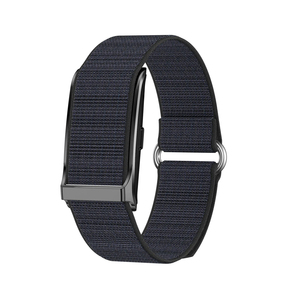
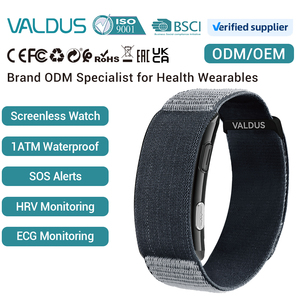
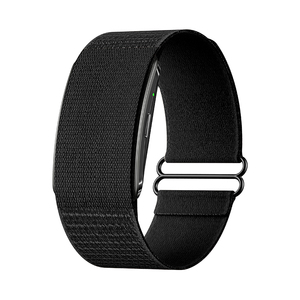
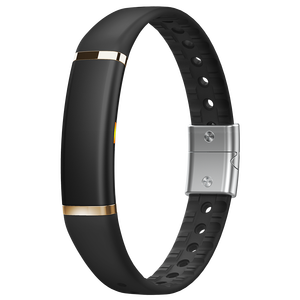

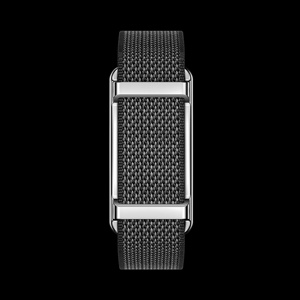
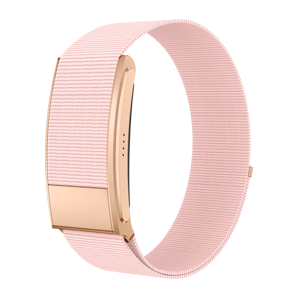
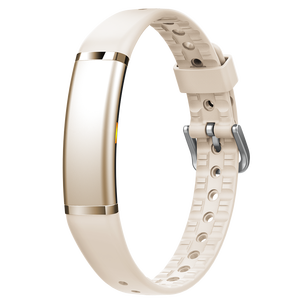
From custom magnetic pogo-pin tooling to automated SMT overmolding, our facility delivers end-to-end hardware execution backed by serial-level traceability.
Rapid 3D modeling and custom plastic/silicone injection tooling within 14 business days. Specialized magnetic housing designs for sealed smart wearables.
Automated SMT AOI verification, conductor resistance calibration, 48-hour continuous voltage burn-in, and full AQL 1.0 packed batch sampling.
Integrated E-Marker IC support engineered for multi-protocol 65W to 240W Power Delivery and high-speed thermal handshake negotiation.
Fully compliant with CE, FCC, RoHS, REACH, BIS, and MFi standards. Materials tested for biocompatibility, skin contact safety, and zero halogen discharge.
In the rapidly evolving landscape of smart wearables, IoT sensors, and high-power mobile accessories, purchasing managers and hardware architects face complex engineering trade-offs when selecting custom charging cable suppliers. Modern charging infrastructure is no longer merely a copper conduit; it is an integrated electronic assembly requiring signal integrity calibration, biometric skin-safe contact compliance, heat dissipation logic, and precise physical mating retention.
As a specialized OEM/ODM manufacturing facility, we engineer proprietary cable solutions that eliminate field failures, reduce return-merchandise authorization (RMA) rates below 0.2%, and withstand rigorous environmental stress test routines.
Smartbands, screenless activity trackers, and medical ECG bracelets demand ultra-compact charging interfaces due to strict IP68 ingress protection requirements. Traditional micro-USB or exposed Type-C ports create water entry vectors and accumulate sweat salt corrosion. Our OEM magnetic charging interfaces solve this through precision pogo-pin tooling:
For fast-charging power adapters and high-current data links, selecting the correct American Wire Gauge (AWG) is critical to minimizing voltage drop across extended lengths:
| Cable Class | Power Conductor (AWG) | Data Conductor (AWG) | Max Current / Power | Recommended Outer Material | Primary OEM Application |
|---|---|---|---|---|---|
| Wearable Pogo-Pin | AWG 26 / 28 | AWG 30 (Optional) | 2.4A / 12W | Skin-Friendly TPE / Silicone | Smartbands, ECG Trackers, Hearing Aids |
| Standard USB-C PD | AWG 22 / 24 | AWG 28 (Twisted Pair) | 3.0A / 60W | High-Flex Braided Nylon | Smartphones, Tablets, BT Headsets |
| High-Power GaN Link | AWG 18 / 20 | AWG 26 (Shielded) | 5.0A / 100W–240W | Kevlar Reinforced Weave | Laptops, Power Stations, Drones |
| Industrial Harsh-Env | AWG 20 / 22 | AWG 26 (Foil + Braid) | 3.0A–5.0A | PUR (Polyurethane) Jacketing | Outdoor IoT, Fleet Telematics, Military |
The primary point of mechanical failure in OEM charging cables occurs at the junction between the rigid connector housing and the flexible wire jacket. Our OEM production line incorporates custom strain relief (SR) geometry calculated via Finite Element Analysis (FEA):
By enforcing a segmented rib structure with progressive flexibility gradients, bend forces are distributed over a 15mm-25mm arc rather than a single pivot point. Our standard test regime subjects sample lots to 10,000+ mechanical flex cycles under a 200g load at 60 bends per minute without conductor strand fracture or jacket tearing.
Anticipating regulatory mandates, eco-material adoption, and hardware protocol shifts across the global consumer tech supply chain.
With the European Union’s Common Charger Directive in full effect, international buyers are transitioning all auxiliary accessories to unified USB-C protocols. OEM procurement strategies now mandate integrated E-Marker microchips even in mid-tier cables to maintain cross-platform device safety and compliance.
Corporate sustainability goals (ESG) are driving demand for post-consumer recycled (PCR) plastics and bio-based Thermoplastic Elastomers derived from plant starches. Brand owners can now specify 30% to 70% PCR content in cable jacket compounds without sacrificing flex life or flame retardancy ratings (UL94-V0).
As Gallium Nitride (GaN) chargers shrink in size while pushing up to 240W via EPR (Extended Power Range), cable assemblies must incorporate internal thermistors (NTC) to monitor terminal temperature dynamically, cutting power immediately if terminal overheat occurs.
When selecting an OEM cable manufacturing partner, evaluating factory floor machinery, raw material procurement standards, and QC protocols is far more indicative of long-term product reliability than low unit pricing alone.
Manual hand soldering introduces flux residue, inconsistent solder joint volume, and high cold-solder defect rates. Advanced cable factories utilize automated 4-axis precision laser soldering systems that apply identical energy profiles to every micro-pin, ensuring zero electrical opens or intermittent resistance drops.
To prevent Electromagnetic Interference (EMI) from disrupting nearby Bluetooth 5.3 audio codecs or GPS tracking antennas in smart wearables, premium OEM cables utilize 100% coverage aluminum foil wrapping combined with high-density tinned copper braid (80%–95% coverage grid).
Comprehensive technical and commercial responses to common inquiries submitted by hardware procurement leads.
Consult directly with our senior hardware engineering team. Receive technical CAD drawings, material samples, and transparent volume quotation pricing within 24 hours.