Engineered smart wearables, audio & connectivity hardware — explore the new technology

Explore our engineered OEM/ODM product matrix featuring multi-sensor wellness bands and low-loss inductive wireless charging architecture. Built with BIS, CE, and FCC certification compliance for global hardware distributors.
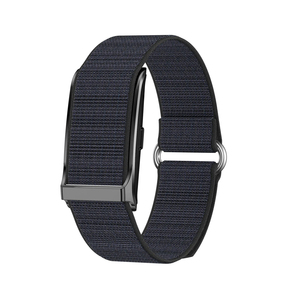
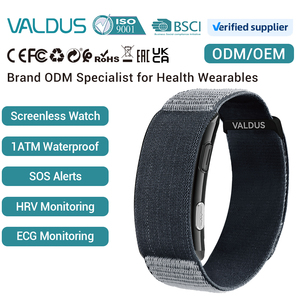
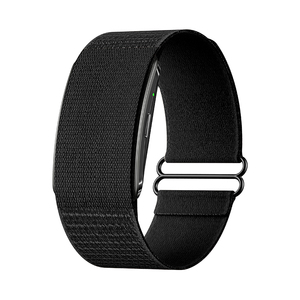
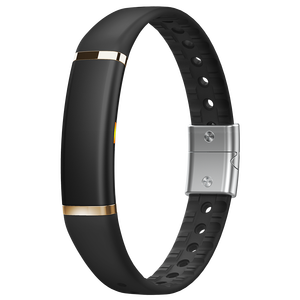

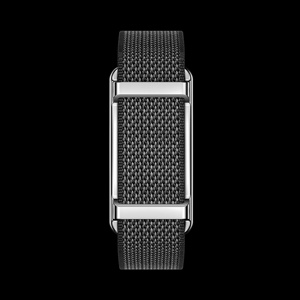
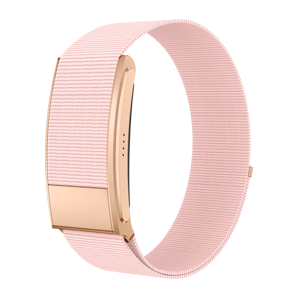
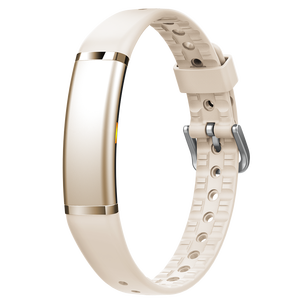
The consumer electronics ecosystem is undergoing a fundamental structural transition toward unified magnetic inductive charging protocols. Driven by the WPC (Wireless Power Consortium) Qi2 benchmark, consumer demand has moved beyond simple Baseline Power Profile (BPP) 5W/7.5W systems to high-efficiency Magnetic Power Profile (MPP) architecture operating at 15W to 25W power output levels. For brand managers, procurement directors, and hardware distributors, sourcing from qualified OEM/ODM wireless charger manufacturers requires rigorous audit methodologies spanning thermal throttling control, electromagnetic compatibility (EMC), foreign object detection (FOD) algorithms, and multi-layer PCBA integration.
As a specialized OEM/ODM manufacturing facility, our engineering operations combine deep RF electromagnetic design, NPO ceramic resonant capacitor integration, and high-speed Surface Mount Technology (SMT) lines to supply turn-key wireless power hubs, desktop multi-device docks, and wearable charger ecosystems built for global compliance.
Unlike legacy Qi 1.2.4 designs that suffered up to 35% power loss through coil misalignment, modern Qi2 Magnetic Power Profile (MPP) chargers utilize specialized N45SH neodymium magnet rings coupled with co-planar ferrite shielding. This achieves auto-alignment within 0.2mm tolerances, reducing thermal waste dissipation by over 42% and keeping device skin temperatures below 38°C during full-speed fast charging cycles.
Our ISO9001 and IATF16949-certified factories operate 12 automated SMT production lines backed by 5-stage inline quality control to ensure zero-defect shipment standards.
Equipped with Yamaha high-speed mounters and 3D Solder Paste Inspection (SPI), our PCBA lines place 0201 micro-components and complex wireless IC controllers with ±0.015mm placement precision.
Utilizing phase-change graphite heat spreaders, ultra-thin copper heatsinks, and active micro-fan cooling tunnels, our chargers mitigate thermal throttling to maintain continuous 15W peak output.
Proprietary dual-frequency Q-factor sensing algorithms detect metal objects (coins, keys, foil) down to 1.5mm diameter within 0.15 seconds, automatically cutting RF power output to prevent thermal hazards.
From CNC-machined aerospace aluminum enclosures to eco-friendly post-consumer recycled (PCR) polycarbonate housings, our in-house ID studio transforms initial concepts into production tooling in 21 days.
Every SKU is engineered to pass Qi2, WPC 2.0, CE, FCC, RoHS, REACH, KC, PSE, and BIS regulatory testing, eliminating compliance bottlenecks for international market expansion.
Raw material lot tracing, automated optical inspection (AOI), 48-hour burn-in aging under 45°C ambient load, and final AQL 0.65 sampling guarantee enterprise-grade field reliability.
Understanding the technological trajectory of wireless power transmission allows brand buyers to optimize inventory cycles and prevent product obsolescence. Below are the key engineering evolutions shaping OEM/ODM contract specifications over the next five years:
Gallium Nitride (GaN) power switches are moving directly onto wireless charger controller PCBs. By replacing silicon MOSFETs with GaNFETs, power conversion efficiency increases from 78% to over 91%, enabling ultra-compact form factors that generate less operational heat.
Next-gen 3-in-1 and 4-in-1 folding travel chargers utilize dynamic power distribution microcontrollers. These ICs realign power allocations in real-time between smartphones (15W), smartwatches (5W), and TWS earbuds (3W) based on real-time thermals and state-of-charge data.
Regulatory mandates across the EU and North America are forcing idle power consumption below 0.005W. Advanced burst-mode PWM controllers isolate the primary AC-DC circuit when no receiver coil is handshake-verified, reducing standby energy drain to virtually zero.
A comparative evaluation of standard commercial chargers versus our Enterprise OEM/ODM Wireless Charging Platform:
| Performance Parameter | Standard Commercial Grade | Enterprise OEM/ODM Platform | Strategic Advantage |
|---|---|---|---|
| Inductive Standard | Qi 1.2.4 (BPP / EPP) | Qi2 MPP (WPC 2.0 Compliant) | Universal magnetic alignment & future iPhone/Android compatibility |
| Energy Conversion Efficiency | 68% – 74% Max | 85% – 89% Peak | Less heat loss, faster charge cycles, reduced thermal stress on battery |
| FOD Sensor Precision | Single-stage Voltage Monitoring | Dual-Frequency Q-Factor Sensing | Detects non-magnetic metals down to 1.5mm within 0.15 seconds |
| Thermal Throttle Threshold | Triggers @ 45°C (Drops to 5W) | Active Cooling @ 38°C (Sustains 15W) | Prevents charge speed drop-off during extended 100% load operation |
| Magnet Array Specs | N35 Standard Ferrite Ring | N45SH High-Temp Neodymium Arc Magnets | 1200g magnetic holding force, stable up to 100°C without demagnetization |
| Standby Drain Power | 0.05W – 0.1W | < 0.005W Ultra-Low Idle | Meets strict EU ErP Lot 6 and California CEC energy efficiency rules |
From initial DFM (Design for Manufacturability) analysis to mass production shipment, our streamlined engineering workflow guarantees product reliability and on-time delivery.
System architecture scoping, schematics review, PCB layout simulation, and magnetic coil selection based on targeted power profiles (15W/25W) and thermal budgets.
3D SLA prototyping, functional EVT PCBA spinning, initial RF efficiency calibration, and 1st-stage thermal chamber testing under full current load.
Injection mold tooling fabrication, DVT validation runs, foreign object detection tuning, and submission to accredited labs for Qi2, FCC, CE, and RoHS certifications.
Pilot Production Validation (PVT), SMT line optimization, 100% automated optical inspection (AOI), 48-hour active burn-in aging, and final AQL 0.65 packaging release.
Direct technical answers to common engineering, procurement, and logistics inquiries from B2B sourcing professionals.
Partner with a certified wireless power manufacturer. Our engineering team is ready to analyze your DFM requirements, provide bill-of-materials (BOM) estimates, and dispatch evaluation samples.