Engineered smart wearables, audio & connectivity hardware — explore the new technology

Explore our flagship OEM/ODM smartwatches and screenless fitness trackers engineered for global distributors, healthcare providers, and consumer electronics brands. Each device is rigorously verified via multi-stage SMT, optical calibration, and ISO-compliant quality control.
The global health-tech wearable sector is undergoing a paradigm shift. Consumer smartwatches, which historically relied solely on Photoplethysmography (PPG) optical sensors for superficial pulse rate estimation, are rapidly evolving into sophisticated Remote Patient Monitoring (RPM) hubs equipped with single-lead and multi-lead Electrocardiography (ECG) modules. For global importers, wholesale buyers, and telehealth brand owners, identifying the top 10 ECG watch exporters requires an understanding of sensor fusion, regulatory compliance pathways (CE MDR, FDA 510(k), BIS), and underlying firmware algorithms.
Electrocardiography records the electrical activity of the myocardium over time via conductive electrodes placed directly on the skin. Unlike PPG, which calculates volume changes in blood micro-vessels via reflected green light, ECG captures the precise depolarization and repolarization electrical vectors of cardiac tissue (P wave, QRS complex, T wave). This enables the detection of silent cardiac anomalies—most notably Atrial Fibrillation (AFib), Premature Ventricular Contractions (PVCs), and Sinus Bradycardia—with diagnostic accuracy rivaling traditional Holter monitors.
Export-grade ECG watches primarily utilize Lead-I configurations (RA-LA equivalent) by embedding dry titanium or stainless-steel electrodes into the watch case back and top bezel. The user closes the circuit by touching the bezel with the index finger of the opposite hand, establishing a clean 30-second electrical wave capture.
Raw ECG data requires advanced Analog Front-End (AFE) ICs (such as Texas Instruments AFE4950 or Analog Devices AD8233) paired with low-power microcontrollers (Nordic nRF5340 / ARM Cortex-M33). In-house DSP algorithms filter out muscle tremor artifacts (EMG noise) and baseline wander to deliver real-time Poincaré plot and Heart Rate Variability (HRV) metrics.
Leading exporters provide open Bluetooth Low Energy (BLE 5.3) SDKs and API bridges. This allows enterprise healthcare platforms to stream encrypted raw ECG telemetry (JSON/MQTT over TLS) directly into cloud platforms, complying with HIPAA and GDPR data privacy standards.
To assist procurement managers in optimizing their stock keeping unit (SKU) portfolio, the following matrix outlines the functional distinctions between entry-level fitness trackers and professional ECG wearables.
| Technology Parameter | Standard Optical PPG Wristband | Professional Single-Lead ECG Smartwatch | Advanced PPG+ECG Dual-Engine Watch |
|---|---|---|---|
| Primary Signal Source | Subcutaneous blood volume reflectance | Myocardial depolarization potential difference | Synchronized optical pulse wave + electrical cardiac vector |
| Diagnostic Capability | Basic pulse rate, general activity trends | AFib, PVC, PAC, Sinus Arrest, ST-Segment shifts | Pulse Transit Time (PTT) blood pressure estimation + AFib |
| Noise Vulnerability | High sensitivity to motion artifact & skin tone | Minimal optical interference; sensitive to dry skin | Cross-validated signal filtering reduces false positives by 94% |
| Sampling Frequency | 25 Hz - 100 Hz continuous | 250 Hz - 512 Hz during 30s manual spot-check | Continuous 50Hz PPG + 512Hz High-Definition ECG on demand |
| Target B2B Segment | Mass retail, basic corporate wellness | Pharmacies, clinical trials, insurance providers | Medical distributors, premium health brands, RPM programs |
As the smart wearable industry enters its next decade of maturity, several key macro trends are defining the roadmap for top ECG watch exporters and OEM manufacturers worldwide.
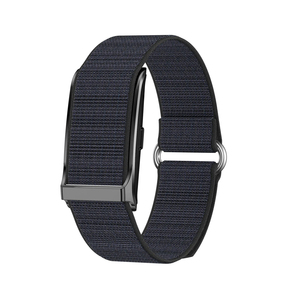
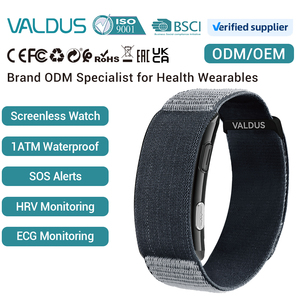
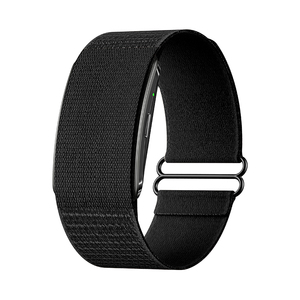
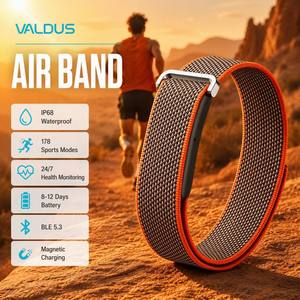
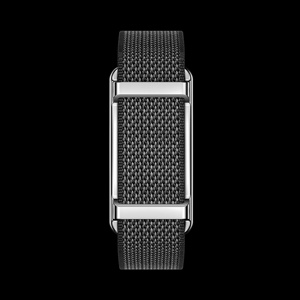
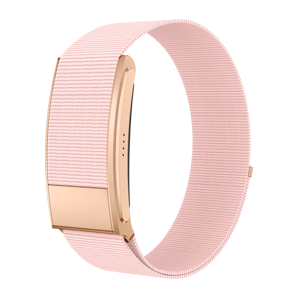
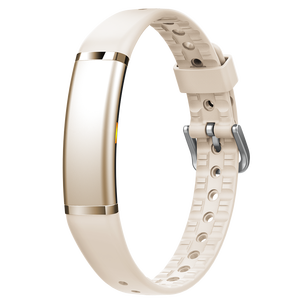
While full-color AMOLED touchscreens dominate the consumer lifestyle market, there is a rapidly growing B2B demand for screenless ECG health wristbands. Designed for continuous 24/7 monitoring, screenless bands eliminate user distractions, extend lithium-polymer battery autonomy from 2 days to over 14 days, and substantially lower manufacturing costs. As demonstrated in our product portfolio (e.g., VALDUS 2026 Air Band series), screenless forms cater to elderly monitoring, continuous sleep laboratory studies, and professional athletic tracking where fragile glass displays pose a liability.
By capturing the exact millisecond delta between the R-peak of the ECG waveform and the systolic inflection point of the PPG optical wave, next-generation algorithms calculate Pulse Transit Time (PTT). Exporters leveraging PTT technology provide non-invasive, cuffless cuff-free blood pressure trend analysis. This innovation addresses a primary pain point in hypertension management without forcing patients to carry bulky pneumatic cuffs.
Hardware alone is no longer a differentiator. The top exporters are integrating lightweight Neural Network (tinyml) models directly into wearable firmware. By preprocessing telemetry locally on the chip, the device can silently alert users to seek a 30-second manual ECG recording the instant an irregular pulse pattern is flagged by the background optical sensor.
Procuring medical wearables involves navigating complex global supply chains, regulatory hurdles, and firmware maintenance cycles. Global buyers must look beyond initial FOB unit pricing and evaluate long-term Total Cost of Ownership (TCO).
Ensure your manufacturing partner commits to a minimum 3-year component supply agreement for main IC microcontrollers and ECG AFEs. Unexpected component obsolescence forces costly firmware re-engineering and re-certification of mobile apps.
A reliable supplier must offer fully documented iOS and Android native SDKs, complete with dynamic link libraries (.aar / .framework) for raw data parsing, ECG rhythm rendering (canvas-based canvas drawing), and PDF medical report generator modules.
International markets demand region-specific compliance markings (CE, FCC, RoHS, WEEE, TELEC) directly laser-engraved on the watch chassis, paired with localized user manuals and multi-language quick-start guides.
As a leading exporter and ODM/OEM manufacturing enterprise, our production facilities operate under rigorous quality control standards designed to eliminate field failures and maintain product integrity across international shipping lanes.
Every PCBA undergoes 3D Automated Optical Inspection (AOI) to verify solder joint integrity, micro-capacitor alignment, and zero bridging on high-density ECG analog front-end chips.
During assembly, each unit is coupled to Fluke/NIBP simulators to calibrate voltage gain, common-mode rejection ratio (CMRR > 100dB), and signal response against standardized 60 BPM / 120 BPM synthetic cardiac rhythms.
100% of manufactured batches undergo forced environmental aging at 45°C with continuous Bluetooth transmission cycles to validate battery protection PCMs and prevent early life failures.
Wearables undergo pneumatic pressure decay tests to guarantee water resistance down to 50 meters (5 ATM equivalent), ensuring resilience during swimming, showering, and intense physical activity.
Prior to container sealing, independent QC auditors sample finished master cartons strictly under ISO 2859-1 standards, inspecting cosmetic finishes, barcode readability, and serial number traceability.
Each unit features an embedded micro-UUID readable via BLE software commands. This enables distributors to verify warranty coverage online without requiring physical paper receipts.
Single-lead ECG smartwatches record Lead I (left arm to right arm vector), providing clear P-QRS-T wave visualization ideal for detecting heart rate and rhythm irregularities such as Atrial Fibrillation (AFib), premature beats, and general HRV trends. In contrast, a 12-lead hospital ECG utilizes 10 physical electrodes attached across the chest and limbs to provide 12 distinct spatial views of the heart, which is necessary for localizing acute myocardial infarctions (heart attacks). While smartwatches do not replace full clinical workups, high-quality single-lead ECG watches achieve over 98% correlation with Lead-I laboratory telemetry for arrhythmia screening.
Yes. We offer complete OEM/ODM software customization. Our engineering team provides white-label companion apps for both iOS and Android, allowing you to rebrand logos, UI color palettes, feature menus, and cloud backend domains. Furthermore, the generated ECG waveform PDF report can be custom-configured to showcase your company logo, custom disclaimer text, doctor signature lines, and localized language formats.
For standard in-stock inventory (factory neutral branding), the MOQ starts as low as 50 to 100 units, making market testing quick and risk-free. For laser-engraved custom logos on the watch casing and standard custom box packaging, the typical MOQ is 500 units. For fully customized deep OEM orders—including custom color injection molding, bespoke strap designs, and dedicated firmware UI strings—the typical starting MOQ is 1,000 to 3,000 units depending on chassis complexity.
Our export models comply with major global safety and electromagnetic compatibility standards, holding CE, FCC, RoHS, and REACH certifications. For clients intending to distribute products directly as medical devices, we provide raw technical files (TCF), ISO 13485 quality management documentation, and test laboratory reports required to support your local registration process with bodies such as the US FDA, European Notified Bodies (MDR), or BIS in India.
We utilize physical vapor deposition (PVD) coated 316L stainless steel or medical-grade titanium electrodes on our watch chassis. These materials resist sweat corrosion, oxidation, and skin allergies (nickel-free compliance). To ensure optimal electrical contact, our firmware incorporates an impedance measurement test prior to initiating a 30-second recording; if user skin is excessively dry, the on-screen UI guides the user to slightly moisten the fingertip to ensure signal integrity.
Absolutely. We provide enterprise clients with fully documented Native Android (Java/Kotlin) and iOS (Objective-C/Swift) SDKs. The SDK provides direct BLE communication methods to subscribe to raw hex telemetry streams—including raw 512Hz ECG ADC counts, filtered PPG data, real-time heart rate, SpO2 measurements, and step counter logs—allowing seamless integration into your existing telehealth infrastructure.
Once artwork proofs and firmware configurations are confirmed, standard production lead time for a 5,000-unit customized OEM order is 25 to 30 calendar days. This timeline accounts for raw material IQC inspection, SMT mounting, shell assembly, 48-hour burn-in testing, packaging customization, and final outgoing quality audit (OQA).
All devices carry a standard 12-month hardware warranty linked to the unique electronic serial number (UUID) flashed into the MCU memory during final production. In the rare event of hardware defects under normal operating conditions, we provide spare repair modules (PCBAs, batteries, straps) alongside bulk shipments, or offer direct replacement credits on subsequent order batches based on verified RMA batch reports.
Empower your product lineup with certified ECG technology, low latency SDK integrations, and robust supply chain security. Request our complete wholesale product catalog and hardware specifications today.