Engineered smart wearables, audio & connectivity hardware — explore the new technology

Engineered for global telecom compliance, multi-constellation GPS tracking, low-power telemetry, and continuous health monitoring.
The global market for smart wearables dedicated to child safety, real-time location services (RTLS), and parental communication is undergoing a structural paradigm shift. As legacy 2G and 3G cellular infrastructure undergoes sunsetting across North America, Europe, and major parts of APAC, global importers and consumer electronics brands are aggressively transitioning their procurement pipelines toward 4G LTE VoLTE and emerging 5G NR (New Radio) platforms. China’s manufacturing ecosystem, centered in the Shenzhen-Dongguan hardware corridor, remains the epicenter for high-precision OEM/ODM production of kids smartwatches.
For enterprise procurement officers, brand owners, and telecommunication distributors, evaluating a Top China Kids Smartwatch Manufacturer requires looking far beyond standard unit cost (FOB). Modern procurement mandates deep scrutinization of high-frequency RF engineering capabilities, firmware lifecycle stability, over-the-air (OTA) update security, non-toxic materials compliance (EN71, REACH), and robust data privacy alignment with international mandates such as COPPA (Children's Online Privacy Protection Act) and GDPR (General Data Protection Regulation).
Historically, kids watches were treated as disposable low-cost novelties running basic GSM 2G bands with crude LBS (Location Based Service) triangulation. Today, enterprise buyers demand hybrid positioning engines utilizing simultaneously GPS (L1+L5 dual-frequency), GLONASS, BDS (Beidou), Wi-Fi MAC address sniffing, and Cellular Tower Triangulation to achieve indoor and outdoor spatial accuracy within 3 to 5 meters.
Combining in-house surface-mount technology (SMT), acoustic cavity engineering, and serial-level traceability to minimize field returns.
Every high-density PCBA undergoes 3D Automated Optical Inspection (AOI) and X-ray testing for BGA solder joint integrity, eliminating micro-bridging and cold joints.
Equipped with Agilent/Keysight wireless communication test sets, every batch undergoes active TRP/TIS OTA testing to ensure optimal cellular transmission across global bands.
Pure-cobalt lithium-ion polymer batteries are cycle-tested under thermal stress up to 45°C. Automated burn-in chambers verify battery management system (BMS) safety.
100% of finished smartwatch enclosures pass negative/positive pneumatic vacuum pressure testing before acoustic membrane sealing, guaranteeing real water immersion protection.
Shipments follow MIL-STD-105E / ISO 2859-1 AQL 1.0 Major / 2.5 Minor sampling standards. Uncompromising cosmetic, structural, and functional quality control before container loading.
Laser-etched IMEI and MAC address barcodes link every unit to component lot numbers, enabling instantaneous RMA verification and streamlined spare-part supply chains.
As a primary exporter and manufacturer based in China, remaining competitive requires aggressive investment in hardware and firmware innovations. Below is an engineering overview of the technology stacks shaping next-generation kids wearables:
The primary operational bottleneck for 4G/5G kids smartwatches is battery capacity constrained by wrist-size ergonomics (typically 400mAh to 700mAh). Leading manufacturers are transitioning from legacy single-core application processors to dual-core heterogeneous MCU+AP platforms (such as Unisoc W307/W317 series or MediaTek MT6739/MT6761). The low-power RTOS MCU handles continuous step counting, background Bluetooth beaconing, and system standby, while the Linux/Android-based AP powers HD VoLTE video calling, camera processing, and GUI rendering only when actively triggered. This operational separation extends battery life from 24 hours to over 72 hours under standard usage profiles.
Physical SIM card trays represent the single most common failure point for water ingress in kids smartwatches. Overseas buyers are increasingly requesting eSIM (Embedded SIM) configurations. By soldering an MFF2 eSIM chip directly onto the PCBA during SMT, mechanical rubber gaskets are eliminated, structural rigidity is elevated, and water tightness is upgraded to true IP68/5ATM standards. Furthermore, eSIM enables remote SIM provisioning (RSP), allowing telecommunication carriers to sell devices directly with over-the-air plan activation.
Standard geofencing relies on static circular GPS zones, which often trigger false positive alerts due to urban canyon multipath signal degradation. Advanced OEM manufacturers are embedding machine learning algorithms into the parent companion app and device edge-firmware. The system learns the child's daily commute route to school and flags real-time spatial anomalies, sudden loss of velocity, or unexpected route diversions while filtering out transient GPS drift noise.
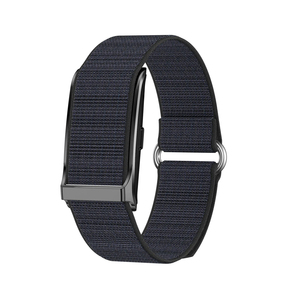
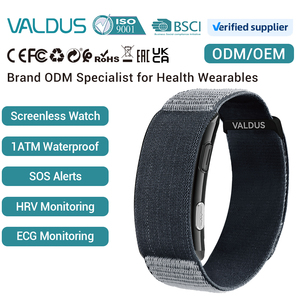
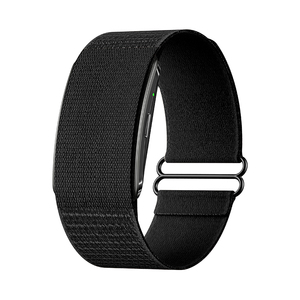
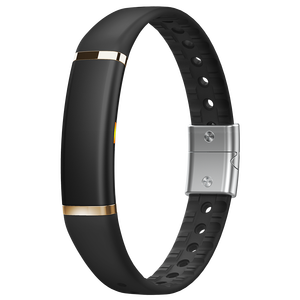
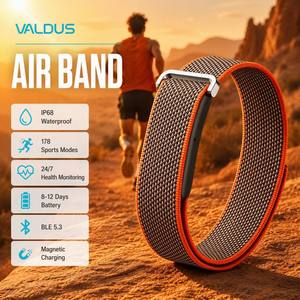
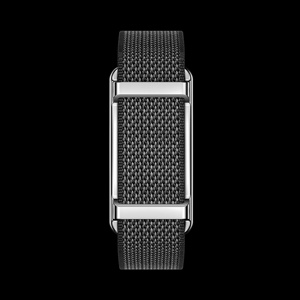
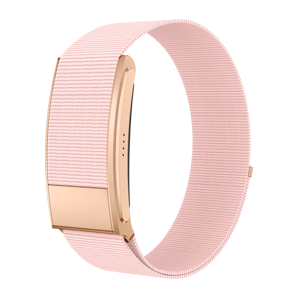
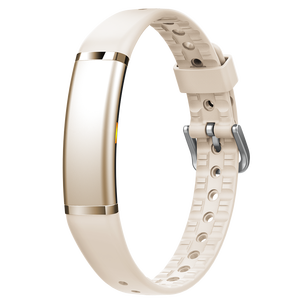
Following the integration of wrist-based PPG sensors in adult fitness trackers (as seen in our screenless smart band series), kids smartwatches now feature continuous skin temperature monitoring, photoplethysmography (PPG) heart rate tracking, and optical SpO2 pulse oximetry. Firmware algorithms are specifically calibrated for pediatric physiological parameters, ensuring accurate vitals tracking during sports, sleep, and study sessions without triggering erroneous tachycardia warnings.
Comprehensive B2B comparison for sourcing managers, evaluating technical specs, cellular bands, positioning accuracy, and battery performance.
| Product Category | Cellular / RF Platform | Positioning Technology | Display / Shell Type | Battery Life Profile | Primary Compliance Certs |
|---|---|---|---|---|---|
| 4G/5G Flagship Kids Watch | LTE-FDD: B1/3/5/7/8/20 LTE-TDD: B38/39/40/41 VoLTE Calling |
GPS (L1+L5) + GLONASS + Wi-Fi + LBS + Sensor Fusion | 1.44" - 1.85" IPS / AMOLED Reinforced ABS/PC Shell |
680mAh - 850mAh (48-96 hrs Standby) |
CE, FCC, RoHS, REACH, COPPA, EN71 Safety |
| 2G / Basic Safety Watch | GSM/GPRS 850/900/1800/1900 MHz | Single GPS + LBS Triangulation | 1.44" TFT Touch Screen Soft Silicone Strap |
400mAh - 500mAh (24-48 hrs Standby) |
CE, FCC, RoHS |
| Screenless Health Tracker | Bluetooth 5.3 Low Energy (BLE) | Smartphone Assisted GPS / Motion Trajectory | Screenless Non-Display High-Gloss Polycarbonate |
90mAh - 150mAh (7-14 Days Operation) |
CE, FCC, BIS, IP68 Waterproof Test |
| HRV / ECG Smart Bracelet | Bluetooth 5.2 / BLE Telemetry | 6-Axis Inertial Accelerometer + Gyroscope | Monochrome OLED / Screenless Option | 120mAh Pure Cobalt (5-10 Days Operation) |
CE, RoHS, Medical PPG/ECG Test Reports |
Navigating the supply chain for kids smartwatches requires a structured approach to risk management, regulatory verification, and private-label customization. Importers must establish strict vendor audit protocols before issuing Purchase Orders (PO).
1. Industrial & Mechanical Tooling (ID/MD): Custom enclosure tooling requires 35 to 45 days, including CNC prototype validation and T1 sample approval.
2. PCBA SMT & RF Tuning: SMT component sourcing (MCUs, RF transceivers, PMICs) requires 2 to 3 weeks depending on semiconductor lead times.
3. Firmware Localization & App Branding: Translating UI language strings, customizing boot animations, and binding server endpoints takes approximately 10 to 14 business days.
4. Mass Production & Quality Inspection: Assembly, ultrasonic welding, hydro-testing, aging cycles, and final AQL 1.0 audit require 20 to 25 days for batch orders of 5,000 to 50,000 units.
Clear, authoritative answers addressing technical specs, custom branding, regulatory testing, and warranty frameworks.