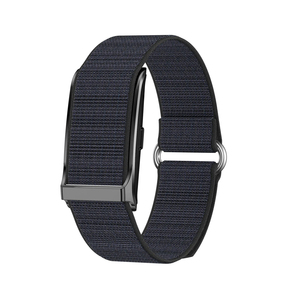
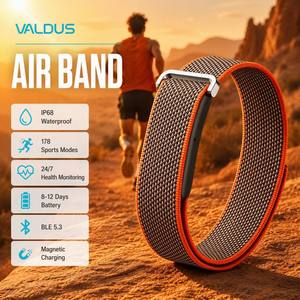
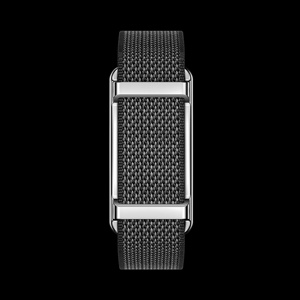
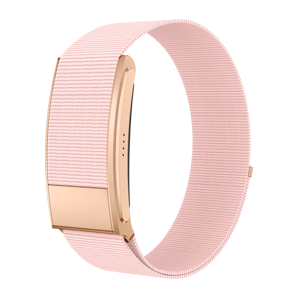
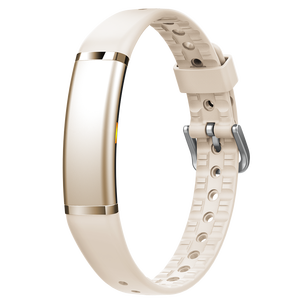
Screenless Waterproof Life Wristband GPS Running Trajectory Multi-Sport Tracker
Screenless Design
GPS Trajectory
24/7 Health
5ATM Water Resistant

Engineered for precision metrics, rugged endurance, and seamless algorithm integration. Choose a model below to launch your next custom hardware batch.
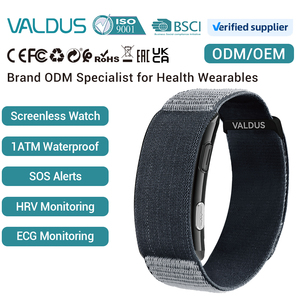
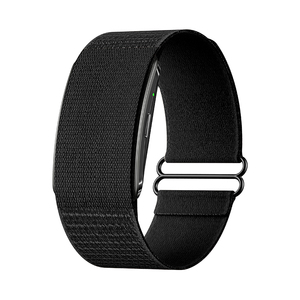
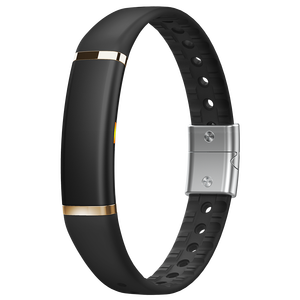
The global sports watch and smart health wearable sector is undergoing a fundamental structural transition. Driven by advances in micro-electro-mechanical systems (MEMS), photoplethysmography (PPG) optical sensor arrays, ECG sensor fusion, and low-power system-on-chip (SoC) microcontrollers, sports wearables are moving from simple step counters to clinical-grade, continuous biometric monitoring instruments.
For international procurement directors, brand owners, and electronics distributors, sourcing sports watches from Chinese manufacturers requires looking beyond surface cosmetics and unit pricing. Evaluating a supplier demands an understanding of hardware architecture, firmware software development kits (SDKs), optical path calibration, radio frequency (RF) antenna layout, and rigorous quality assurance protocols.
A major development in the sports watch hardware ecosystem is the rise of screenless (non-display) biometric trackers alongside high-brightness AMOLED dynamic displays. Each architecture fulfills specific market intents:
The value of a sports watch depends on algorithm accuracy. Top China factories invest heavily in biomedical optical laboratories. PPG accuracy is affected by skin pigmentation variations, motion artifacts during high-intensity interval training (HIIT), and ambient light leakage.
Leading factories solve motion artifacts using multi-channel optical arrays (green + infrared LEDs paired with dual photodiode receivers) alongside adaptive filtering algorithms. ECG smart wristbands combine physical stainless-steel or titanium electrodes with analog front-end (AFE) chips to capture single-lead electrocardiography, filtering out baseline wander and muscular noise to deliver accurate HRV, P-QRS-T wave metrics, and early atrial fibrillation screening.
How cutting-edge hardware architecture, non-invasive biometrics, and AI algorithm fusion are defining the future of OEM smart wearables through 2026 and beyond.
Next-generation sports bands are abandoning single-core microcontrollers in favor of dual and quad-core architectures. Dedicated RISC-V digital signal processors (DSPs) handle real-time sensor sampling, background heart rate tracking, and step calculation at micro-amp currents, while a high-performance core sleeps until activated for display rendering or Bluetooth 5.4 data transmission.
Advancements in optical spectroscopy are bringing non-invasive continuous blood glucose trend estimation, blood oxygen saturation (SpO2) tracking, blood pressure trend analysis, and continuous body temperature monitoring into commercial sports wristbands. Algorithm models map PPG waveform velocity and pulse wave arrival time (PAT) to blood pressure changes without inflatable cuffs.
For outdoor sports, trail running, and alpine trekking watches, single-band GPS is being replaced by dual-frequency L1+L5 GNSS receivers (GPS, GLONASS, Galileo, BeiDou, QZSS). Dual-frequency receivers resolve signal reflections in urban canyons or dense forests, delivering positioning accuracy down to sub-meter levels while maintaining real-time route tracing.
By pairing 6-axis motion sensors with local hardware noise-cancellation micro-electromechanical microphones, modern screenless smart bracelets act as unobtrusive digital assistants and meeting dictation devices. Built-in encrypted audio storage allows professionals to record ambient dictation while tracking HRV stress indices without phone connectivity.
Sustainability is becoming a core procurement requirement. Modern sports watch factories are adopting liquid silicone vulcanization (LSR), fluoroelastomer straps, ocean-recycled nylon weaves, and lightweight aluminum or carbon-fiber composite enclosures. Straps undergo biocompatibility testing (ISO 10993) to ensure zero skin irritation during high-sweat endurance exercises.
Hardware without robust software integration limits brand scalability. Modern OEM platforms deliver turnkey RESTful API integrations, iOS/Android native SDKs, and custom cloud server endpoints. Brands can integrate raw sensor data streams into their proprietary health platforms or telehealth applications without writing low-level Bluetooth protocols.
When placing high-volume OEM/ODM contracts with Chinese sports watch manufacturers, procurement managers must evaluate key engineering parameters. Below is a benchmark matrix outlining technical standards for commercial-grade sports watches.
| Hardware Subsystem | Standard White-Label Grade | Enterprise OEM / Tier-1 Grade | Testing & Audit Protocol |
|---|---|---|---|
| Main Processor (SoC) | Single-core 32-bit MCU (48MHz) | Dual-Core RISC-V / Nordic nRF5340 / Realtek BLE 5.4 | Current consumption profiling across sleep & active states |
| Biometric Optical Sensor | Single-channel green LED PPG | Multi-channel PPG (Green+IR+Red) + Analog Front End ECG | Anechoic dark-room optical path calibration & skin-tone simulator |
| Ingress Protection | IP67 (Splash-proof only) | 5ATM / IP68 Dynamic pressure waterproof (50m depth equivalent) | Air pressure leak testing + 48-hour saltwater immersion immersion test |
| Battery & Charging | Standard Li-ion, 300 charge cycles | High-density Seiko PCB protection lithium-polymer, 800+ cycles | 48-hour thermal chamber aging, overcharge & short-circuit safety verification |
| Strap & Enclosure | Recycled TPU / Soft PVC | Medical-grade Liquid Silicone (LSR) / Woven Waterproof Nylon | ISO 10993 Cytotoxicity & Sensitization skin-contact testing |
| Firmware & App Support | Generic fixed Android/iOS app | Custom SDK/API, OTA firmware updates, white-label branding | Bluetooth protocol analyzer verification & cloud security audit |
How our industrial manufacturing process guarantees zero-defect shipments, component traceability, and long-term brand integrity for global supply chain partners.
Surface-mount technology (SMT) lines process micro-scale chips, resistors, and sensor arrays onto high-density PCBs. Every circuit board undergoes 100% Automated Optical Inspection (AOI) to detect solder bridge defects, missing components, or tombstoning before component encapsulation.
Wireless performance is critical for sports wearables. Assembled motherboards undergo radio frequency (RF) calibration inside shielded anechoic chambers. Bluetooth transmit power, receiver sensitivity, and GPS satellite signal acquisition latency are tuned to ensure connection stability.
To eliminate early component failures, completed wristband modules are subjected to 48 hours of continuous thermal cycling (0°C to 45°C) while running automated battery charge and discharge routines. This process validates power management IC integrity and lithium-polymer stability under heavy thermal load.
Sports watches designed for swimming, running, and outdoor environments undergo dynamic hydrostatic testing. Each casing is tested in specialized air pressure leakage chambers followed by high-pressure water submersion to guarantee true 5ATM or IP68 ingress protection standards.
Clear, definitive answers to crucial engineering, logistics, and customization questions asked by global distributors and brand buyers.
Our standard Minimum Order Quantity (MOQ) for ready-to-ship catalog models with custom laser-engraved logos or tailored retail packaging starts at 200 to 500 units. For deep OEM/ODM projects requiring custom color injection molding, specialized strap tooling, modified PCB layouts, or proprietary firmware SDK integration, the standard production MOQ is 1,000 to 3,000 units depending on component procurement scale.
Yes. We provide complete software development support for brand partners. We offer comprehensive native iOS (Swift) and Android (Kotlin/Java) SDKs, along with detailed Bluetooth LE API documentation. This allows your internal development team to pair our sports watches, extract raw PPG data streams, step counts, HRV metrics, and sleep logs directly into your private cloud architecture without third-party app dependencies.
Our production line operates under strict ISO 9001:2015 quality management systems. All export-grade sports watches comply with major global regulatory standards, including CE (EMC/LVD), FCC ID, RoHS 2.0, REACH, and BIS (Bureau of Indian Standards) for targeted regional markets. UN38.3 testing summaries and MSDS documentation are provided with every battery shipment for seamless air and sea freight clearance.
We maintain a serial-number-traceable 12-month limited warranty system across all production batches. Every unit is assigned a unique barcode linked to its SMT lot and component sub-suppliers. In the rare event of a hardware failure rate exceeding our AQL 1.0 threshold (less than 0.5% in practice), we issue direct credit notes or provide free replacement units shipped alongside your subsequent order batch, backed by a root-cause engineering analysis (8D Report).
Standard catalog samples with laser customization ship within 3 to 5 business days. Custom firmware builds or initial functional prototypes take approximately 10 to 14 days. Once sample approval sign-off is completed, full mass production lead times generally range between 25 and 35 calendar days, accounting for SMT line scheduling, plastic injection molding, automated aging cycles, and final AQL 1.0 quality audits.
Waterproof verification occurs in two dedicated stages. First, assembled watch cases undergo a 100% dry air-pressure differential test to identify microscopic seal gaps without exposing components to moisture. Second, statistical samples undergo hydrostatic pressure chamber testing equivalent to 50 meters of depth (5ATM), maintaining pressure for 30 minutes followed by thermal condensation testing to ensure absolute zero vapor ingress.