The Architecture of High-Reliability USB Cables & Device Connectivity
In the rapidly changing modern consumer electronics and industrial IoT manufacturing landscape, selecting a top trusted USB cable manufacturer & supplier requires looking beyond surface-level aesthetics. Standard copper assemblies are no longer adequate for modern power delivery and data requirements. Modern fast-charging protocols (such as USB Power Delivery 3.1 EPR), combined with high-frequency telemetry data streams from IoT and smart wearable devices, demand precision-engineered cable architectures.
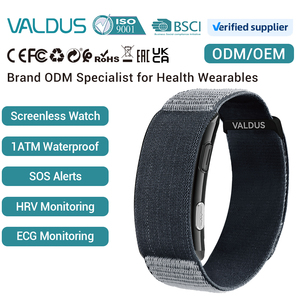
As an engineering-driven manufacturer, our OEM/ODM operations emphasize signal integrity, heat dissipation during high-wattage charging, and long-term mechanical durability. Whether producing heavy-duty USB4 Type-C to Type-C cables, custom magnetic pogo-pin connectors for screenless health trackers, or high-density wire harnesses, our manufacturing processes prioritize zero-defect performance.
"Modern B2B cable procurement is moving away from generic commodity sourcing toward custom-engineered, verified supply chains. Precision impedance matching (90Ω ± 5Ω), active E-Marker microcontroller configuration, and halogen-free bio-based jacketing define the next decade of connectivity."
Our factory utilizes advanced Surface Mount Technology (SMT) alongside Automated Optical Inspection (AOI) to ensure every connector PCB assembly meets international electrical standards. Below is a structural matrix comparing standard commercial-grade USB cables with our enterprise-grade OEM/ODM cable platforms:
20,000+ Flex Cycles (Extended SR Strain Relief Design)
Signal Eye Diagram Performance
Unverified / High Jitter at > 2 Meters
Fully Validated Eye Diagrams up to USB4 80Gbps PAM3
Future Procurement Trends: 2026-2030 USB Cable & Smart Accessory Sourcing
Global B2B buyers and brand procurement directors face structural market shifts driven by international environmental regulations, standardized device charging laws, and changing user requirements for smart devices. Understanding these future procurement trends helps procurement teams minimize risks while securing cost-efficient, long-term manufacturing agreements.
1. The Universal USB-C Standard Mandate
Driven by the EU Common Charger Directive (Directive 2022/2380) and global regulatory alignment, legacy proprietary connectors are rapidly phasing out. All future hardware platforms—including smart bands, laptops, and wireless audio—are consolidating around standardized USB-C protocols.
2. Bio-Based TPE & Eco-Conscious Packaging
Corporate ESG standards require manufacturers to transition from standard PVC to recyclable, halogen-free Thermoplastic Elastomers (TPE), post-consumer recycled (PCR) plastics, and biodegradable woven fiber jacketing without sacrificing flame-retardant safety (UL94-V0).
3. Convergence of Power & Biometric Telemetry
Cables are transitioning from passive copper wires into intelligent hardware components. Modern custom cables incorporate micro-IC controllers that communicate with smart wearable hardware (such as HRV trackers and screenless ECG smart bracelets) to adjust charging currents dynamically and transmit encrypted telemetry data.
Industry Development Trends & Supply Chain Engineering
The global cable and smart wearable manufacturing sector is experiencing consolidation. Buyers increasingly bypass trading intermediaries to partner directly with engineering-led original equipment manufacturers (OEMs) and original design manufacturers (ODMs).
1. Active E-Marker & Smart Chipset Integration: As charging speeds exceed 100W up to 240W, passive cables present thermal risks. Leading manufacturers now embed sophisticated E-Marker (Electronic Marker) microcontrollers inside connector overmolds to execute digital handshakes with power sources, safeguarding connected hardware.
2. High-Frequency Signal Integrity (80Gbps USB4 v2.0): Modern data cables must support multi-channel DisplayPort 2.1 video routing and PCIe data throughput concurrently. Achieving this requires precise differential pair impedance matching and automated micro-coaxial soldering machines that eliminate manual human assembly errors.
3. Automated 5-Stage In-Line Quality Verification: Reliable manufacturing relies on systematic quality control. Our integrated production facilities utilize a strict 5-stage quality management workflow:
Stage 1: SMT AOI
Automated Optical Inspection of raw PCBAs and E-Marker chips prior to cable assembly.
Stage 2: RF Calibration
Vector network analyzer testing for signal attenuation, return loss, and crosstalk.
Stage 3: Thermal Burn-In
48-hour continuous elevated voltage and temperature burn-in testing to catch early failures.
Stage 4: IPX7/IPX8 Test
Hydrostatic pressure immersion testing for waterproof smart bands and sealed cable overmolds.
Stage 5: AQL 1.0 Audit
Final random sampling audit ensuring zero packaging, visual, or electrical discrepancies before shipment.
Partnering with an industry-leading USB cable manufacturer and wearable technology developer provides your brand with distinct operational advantages in market responsiveness, unit economics, and product reliability:
End-to-End Tooling & Rapid Prototyping
In-house CNC mold-making allows custom connector housing designs (aluminum alloy, zinc metal, soft TPE, braided nylon) to move from 3D CAD modeling to physical working samples in as few as 7 business days.
Global Regulatory Compliance
All products are engineered to comply with CE, FCC, RoHS, REACH, WEEE, and BIS international certification requirements. Comprehensive technical test reports accompany every production batch.
Traceable 12-Month Serialized Warranty
We implement laser-etched serial identification codes on custom production lots. This enables component-level supply chain traceability, empowering distributors with predictable warranty management.
B2B Cable Sourcing & Procurement FAQ
Essential technical and commercial answers for hardware distributors, brand owners, and procurement managers before submitting a formal Request for Quotation (RFQ).
What is the Minimum Order Quantity (MOQ) for custom OEM/ODM cable orders?
Our standard production MOQ for custom OEM cable assemblies (including custom logo laser etching, specified wire colors, and tailored length variants) typically starts at 1,000 units per SKU. For specialized smart band magnetic charging cables or high-speed USB4 configurations requiring dedicated connector tooling, MOQs can be adapted based on projected annual call-off volumes.
How do you guarantee signal integrity and eliminate voltage drop over longer cable runs?
To mitigate voltage drop over extended cable lengths (e.g., 2 meters to 5 meters), our engineers increase the power wire conductor gauge to 21 AWG or 19 AWG oxygen-free copper (OFC). For high-speed data transmission, we integrate low-loss dielectrics and active re-timer/re-driver ICs within the connector overmold to maintain clean eye diagrams and comply with USB-IF jitter margin standards.
Which cellular and wireless bands do your companion smart bands & IoT wearables support?
Our cellular-enabled IoT and smart wearable platforms support global 4G/5G LTE FDD bands (B1/B3/B5/B8/B20) with crystal-clear VoLTE voice connectivity. Regional band customization is available for EMEA, LATAM, North America, and APAC network operators. 2G GSM variants (900/1800 MHz) remain available for specific markets with ongoing legacy network infrastructure.
What international quality certifications and environmental testing are provided with shipments?
Every production batch is backed by official CE, FCC, RoHS, REACH, and BIS compliance documentation. Furthermore, we perform salt-spray anti-corrosion testing (48-hour rating for metal connectors), plug/unplug mating durability tests, and mechanical tensile pull testing. Full material safety datasheets (MSDS) and certificate of origin documents are delivered alongside master shipping manifests.
Can packaging and firmware UI strings be localized for specific target retail markets?
Yes. We offer turnkey retail packaging localization services, including FSC-certified paper retail boxes, custom thermoformed blister packs, localized barcodes (EAN/UPC), and multilingual quick-start user manuals. On smart wearables and screenless tracker apps, UI language packs and companion app translation strings are customized prior to mass factory flashing.
Ready to Scale Your Electronics Supply Chain?
Connect directly with our engineering and B2B sales team to request factory pricing, engineering samples, or custom OEM tooling specifications today.