Engineered smart wearables, audio & connectivity hardware — explore the new technology

Field-proven wireless terminal platforms engineered with Qualcomm & Quectel chipsets, supporting Carrier Aggregation, Band 14 FirstNet, CBRS B48, and extreme environmental resilience for New England applications.
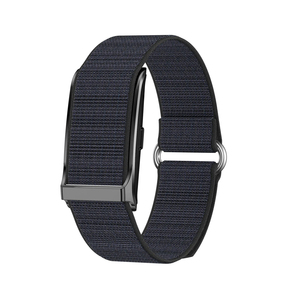
Rugged IP67 waterproof screenless telemetry tracker featuring 24/7 continuous sensor logging, multi-constellation GNSS trajectory mapping, and high-frequency LTE backup links.
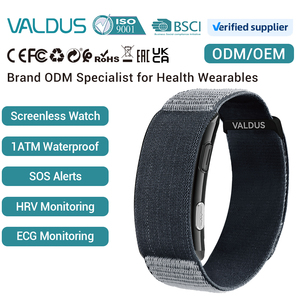
Customizable low-MOQ industrial edge gateway for biometric data monitoring, cardiac diagnostics telemetry, and low-latency encrypted cellular forwarding.
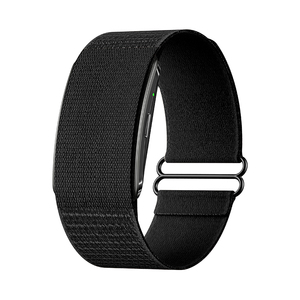
Industrial sensor node with body temperature, pulse, and environmental tracking capabilities, designed for hospital wards and laboratory connectivity in Cambridge & Boston.
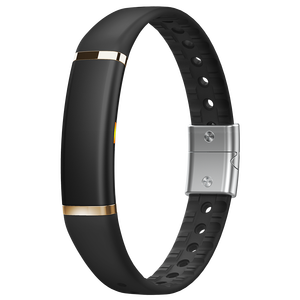
Ultra-low power vibration and motion tracking M2M device engineered for covert field deployments, automated alert dispatching, and remote mobile hub integration.
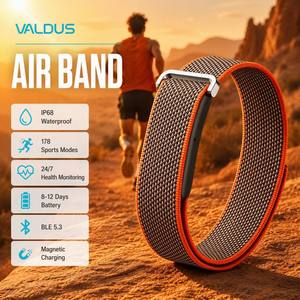
Breathable tactical nylon enclosure with 113 telemetry tracking profiles. Equipped with fast RF handoff algorithms for personnel tracking in heavy industrial sites.
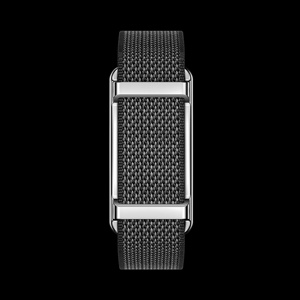
Integrated 6-axis MEMS inertial sensor hub with high-fidelity audio buffer logging, HRV analysis engine, and immediate 4G cloud transmission for field research.
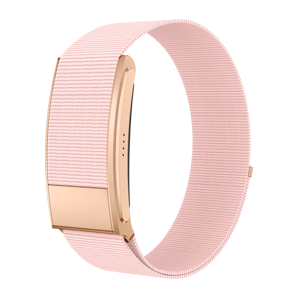
High-capacity power management system driving 5 to 10 days of continuous operation. Built on custom embedded Android runtime for edge telemetry computation.
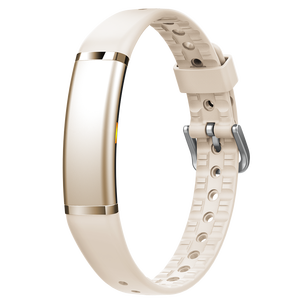
Compact dual-interface tracker combining a crisp low-power OLED display with background M2M cellular data tunneling for corporate wellness and workforce safety.
Analyzing signal propagation challenges, spectrum allocation, and network redundancy standards across New England's premier tech hub.
Greater Boston's urban landscape—characterized by historic red-brick masonry in Back Bay, dense granite structures in Downtown Crossing, and reinforced concrete research labs along Kendall Square—creates severe signal attenuation for standard cellular equipment. High-frequency 4G LTE signals (such as AWS Band 66 or 2.5 GHz Band 41) experience penetration losses up to 28 dB through Boston's historic triple-decker and brick-façade buildings.
As a specialized 4G Router Manufacturer & Supplier, our hardware incorporates dual high-gain external SMA antenna arrays (5 dBi omni-directional) coupled with Low Noise Amplifiers (LNA). This hardware architecture boosts receiver sensitivity down to -112 dBm, ensuring stable link retention inside subterranean research vaults, historic financial district basements, and thick-walled industrial facilities across Cambridge and Waltham.
The Boston-Cambridge biotech corridor houses over 1,000 life sciences companies where uncompromised internet connection is mission-critical. Cleanroom environmental sensors, cryogenic storage freezers, and continuous automated synthesis equipment require continuous data transmission with zero packet drop. A fiber cut caused by Boston municipal roadworks can cost research laboratories millions of dollars per hour.
Our enterprise 4G routers feature Hardware Keep-Alive & Dual-SIM Auto-Failover engines. Operating at the Linux kernel level, the router monitors WAN ICMP ping latency, DNS availability, and signal-to-noise ratio (SINR). Upon detecting primary fiber degradation, the router seamlessly transfers traffic to LTE networks within 300 milliseconds via IPsec VPN pass-through, preserving active SSH sessions, database streams, and cloud telemetry.
Engineered to exceed North American carrier standards (AT&T, Verizon, T-Mobile) and FCC Title 47 Part 15/22/24/27 compliance.
| Feature Parameter | Enterprise Multi-WAN Router | Compact M2M Gateway | Outdoor IP67 Ruggedized Node | High-Speed Cat 12 Failover Hub |
|---|---|---|---|---|
| LTE Category | Cat 4 / Cat 6 Dual Modem | Cat 1 / Cat M1 Low Power | Cat 4 High Gain | Cat 12 (600 Mbps Down) |
| US Band Support | B2/B4/B5/B12/B13/B14/B66/B71 | B2/B4/B12/B13/B66 | B2/B4/B5/B12/B13/B14/B48 CBRS | B2/B4/B5/B7/B12/B13/B14/B48/B66 |
| SIM Slots | Dual Micro-SIM (Auto-Switch) | Single Micro-SIM + eSIM | Dual Nano-SIM + Embedded SIM | Dual SIM (Dual Active / Standby) |
| Thermal Endurance | -30°C to +70°C (-22°F to 158°F) | -20°C to +60°C (-4°F to 140°F) | -40°C to +75°C (-40°F to 167°F) | -35°C to +75°C (-31°F to 167°F) |
| VPN Protocols | IPsec, OpenVPN, WireGuard, GRE | IPsec, L2TP, PPTP | IPsec, OpenVPN, DMVPN | IPsec, WireGuard, OpenVPN, ZeroTier |
| Industrial Interfaces | 4x GbE RJ45, RS232/RS485, DI/DO | 1x 10/100 RJ45, RS485 Terminal | 1x PoE-In GbE RJ45, Terminal Block | 5x GbE RJ45, USB 3.0, RS232/RS485 |
| Certifications | FCC, PTCRB, AT&T, Verizon Compliant | FCC Part 15, RoHS, CE | FCC, IP67, NEMA 4X, MIL-STD-810G | FCC, PTCRB, UL62368-1 Safety |
How procurement managers, IT integrators, and municipal directors across Massachusetts are deploying next-gen cellular routers.
At the Port of Boston (Conley Terminal) and industrial warehousing districts in Chelsea and East Boston, traditional Wi-Fi fails to provide ubiquitous coverage due to metal shipping container signal reflection. Regional enterprise operators are rapidly transitioning to 3.5 GHz CBRS (Band 48) Private LTE Networks. Our routers natively support Band 48 SAS (Spectrum Access System) orchestration, enabling local logistics providers to operate private, noise-free wireless fabrics spanning hundreds of thousands of square feet.
Public transit fleets, regional shuttle buses for major Boston universities (Harvard, MIT, BU, Northeastern), and emergency response services require ruggedized mobile routers. Key specifications demanded by New England transport authorities include ignition sensing, wide DC input (9-36V DC), internal GPS vehicle location tracking, and dual-Wi-Fi AP mode for passenger onboarding alongside secure onboard ticketing data segregation.
Boston's dense public events—such as the Boston Marathon, Fourth of July on the Esplanade, and major sports championships—frequently overload commercial cellular towers. Municipal public safety units and utility services rely on FirstNet (Band 14) preemption capabilities. Our industrial 4G routers are manufactured with Band 14 filters, providing priority connectivity to first responders and emergency infrastructure even when commercial cell grids experience peak congestion.
From harsh coastal weather off Massachusetts Bay to subterranean utility vaults, discover how our routers are deployed locally.
Operating ferries, tugboats, and offshore monitoring buoys in Boston Harbor requires protection against salt spray, high humidity, and freezing ocean spray during Nor'easter storms.
Hardware Solution: NEMA 4X / IP67 die-cast aluminum enclosures with internal heating elements and anti-corrosive brass SMA connections. Configured with dual-high-gain marine antennas to maintain stable 4G data links up to 15 miles off the coast of Cape Ann and the Harbor Islands.
Located in West Cambridge, Waltham, and Lexington, life-science facilities demand isolated network tunnels to prevent corporate espionage and satisfy HIPAA/FDA 21 CFR Part 11 compliance.
Hardware Solution: Industrial 4G routers running custom OpenWRT/Linux firmware with hardware cryptographic acceleration (AES-NI). Securely tunneling ambient temperature readings, gas pressure metrics, and freezer telemetry directly to private AWS/Azure cloud endpoints via IPsec IKEv2.
Deploying payment terminals, dynamic signage, and Level 3 EV fast chargers across Boston garage structures (such as Post Office Square or Seaport garages) requires reliable M2M cellular bridges.
Hardware Solution: Compact DIN-rail mounted 4G LTE M2M gateways featuring RS485 Modbus bridging, remote SMS command rebooting, and multi-carrier SIM provisioning to automatically connect to whichever signal is strongest underground.
Why procurement leads and hardware distributors trust our enterprise manufacturing capabilities.
As a global manufacturing powerhouse, our production lines adhere to stringent ISO 9001:2015 standards. Every industrial router, cellular modem board, and tracking module undergoes a rigorous 5-stage verification route before export to the North American market:
Modern enterprise buyers in Massachusetts require complete hardware-to-cloud security transparency. Our software engineering teams provide comprehensive firmware customization services:
Direct answers to technical compliance, carrier certification, logistics, and deployment queries.
With over a decade of dedicated research, surface-mount manufacturing expertise, and cellular terminal design, our organization bridges the gap between Asian manufacturing precision and North American enterprise expectations. Whether you are scaling an IoT smart grid in Metro Boston, securing failover connectivity for medical diagnostic labs along Route 128, or deploying fleet telemetry for municipal transport, our engineering team provides direct schematic reviews, custom antenna tuning, and lifecycle firmware maintenance.