Engineered smart wearables, audio & connectivity hardware — explore the new technology

Hardware platforms certified for European telemetry, senior care networks (Teleasistencia), child protection, and industrial safety compliance.
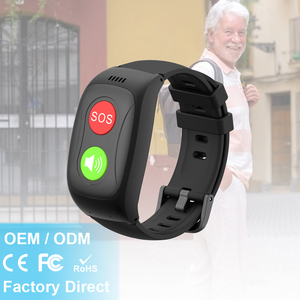
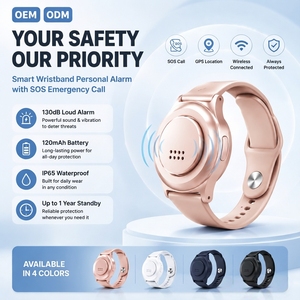
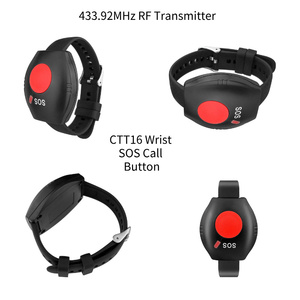
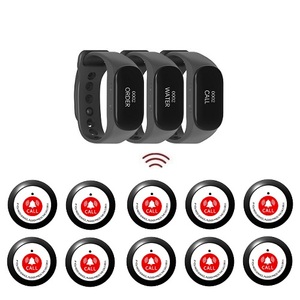
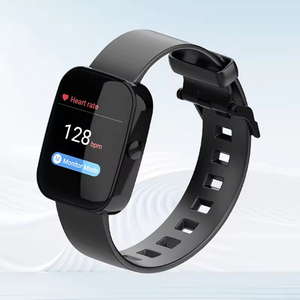
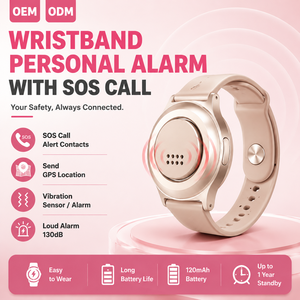
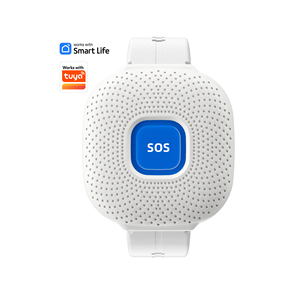
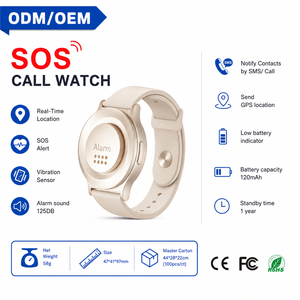
As the European Union accelerates its digital health framework and telecare modernization policies, Spain stands out as one of the most sophisticated markets for personal emergency response systems (PERS), senior safety technology (Teleasistencia), and occupational lone worker protection. Selecting a high-reliability SOS watch supplier capable of serving the Spanish market requires deep insights into RF band architecture, local MNO (Mobile Network Operator) infrastructure transitions, European normative compliance (EN 50134 series), and strict adherence to the General Data Protection Regulation (GDPR).
This comprehensive technical whitepaper provides B2B distributors, municipal telecare service providers, healthcare system integrators, and security brands with an authoritative blueprint for sourcing, customizing, and deploying enterprise-grade SOS emergency wristbands across Spain's Autonomous Communities.
Key Takeaway for B2B Procurement: With Spain's legacy 2G and 3G networks undergoing phased decommissioning by major carriers (Telefónica Movistar, Vodafone España, and Orange / MÁSMÓVIL), legacy telecare devices are experiencing high packet loss and delayed voice connectivity. Sourcing future-proof 4G LTE Cat-1/VoLTE and NB-IoT enabled SOS watches with full European frequency band support is no longer optional—it is a critical operational imperative.
Spain possesses one of the highest life expectancy rates globally, resulting in a rapidly aging demographic profile. The Spanish public health and social services infrastructure relies heavily on the Servicio de Teleasistencia (Telecare Service), administered both at municipal and regional levels (e.g., Madrid, Catalonia, Andalusia, and Valencia). Historically, telecare was anchored by fixed PSTN landline panic buttons. Today, the market is undergoing a massive shift toward mobile telecare (Teleasistencia Móvil), demanding wearable devices that operate seamlessly both indoors and outdoors.
Mobile SOS watches serve as the primary interface between vulnerable citizens, private emergency dispatch centers (CEAS), and regional emergency networks (112). To deliver absolute reliability, hardware manufacturers must account for Spain’s unique topographical and urban challenges—ranging from dense historic city centers with high RF multipath reflections to mountainous rural regions in the Pyrenees and Sierra Nevada.
Multi-constellation GNSS (GPS, GLONASS, Galileo) combined with Wi-Fi MAC scanning and LBS cell-tower triangulation for high-precision location lock inside Spanish concrete apartments.
High-definition Voice over LTE with integrated noise suppression algorithms guarantees two-way voice communication even in noisy street environments.
Sophisticated 6-axis MEMS accelerometer and gyroscope sensor fusion algorithms calibrated to eliminate false positives while detecting real impact events.
When selecting an OEM/ODM manufacturing partner for SOS wearables destined for Spain, hardware engineering must align precisely with local cellular spectrum allocations and network protocols. Sourcing generic global hardware often leads to battery drain, dropped SOS calls, or complete network rejection by Spanish operators.
Spanish MNOs utilize specific 4G LTE frequency bands. Our manufacturing platform integrates LTE Cat-1 modules custom-tuned for European spectrum deployment:
Crucially, our internal firmware stack features certified VoLTE (Voice over LTE) profile configurations for Telefónica Movistar, Vodafone España, Orange España, and Yoigo / MÁSMÓVIL. This ensures that when a user presses the physical SOS button, a circuit-switched fallback (CSFB) is not required, reducing call setup time from 8–10 seconds down to under 2.5 seconds.
Outdoor positioning relies on an integrated GNSS engine supporting GPS, GLONASS, and Europe’s proprietary Galileo satellite system. Utilizing Galileo improves horizontal dilution of precision (HDOP) significantly across European latitudes. For indoor environments where satellite signals are shielded, the watch seamlessly transitions to Wi-Fi location sniffing—matching surrounding AP MAC addresses against global location databases—and fallback LBS (Location Based Services) cellular cell-ID matching.
Integrated into municipal welfare programs. Provides seniors with one-touch access to call center operators, fall alerts, geofence monitoring around residence zones, and automated medication reminder notifications.
Under Spanish Labor Law (Ley 31/1995 de Prevención de Riesgos Laborales), enterprises must protect lone workers in agriculture, logistics, utility maintenance, and night shifts. Features include Man-Down detection, periodic safety check-ins, and silent panic triggers.
Popular among hikers navigating the Camino de Santiago or skiing in the Sierra Nevada. Ruggedized IP67/IP68 casings with high-decibel local acoustic alarms (130dB) and real-time SMS/GPRS telemetry tracking ensure rapid rescue coordination.
As a leading hardware engineering brand and direct manufacturing partner, our production facilities execute rigorous quality assurance procedures to ensure zero-defect reliability for critical life-safety hardware.
Every SOS watch batch destined for the Spanish market passes through a non-negotiable 5-stage quality validation pipeline:
Traceability Commitment: Every device is laser-engraved with a unique IMEI and serial identifier linked to our cloud production database. This enables 12-month serial-traceable warranty coverage, automated OTA firmware management, and instant component lot verification in the event of field audits.
Exporting and distributing emergency telecare hardware within Spain and the wider European Union requires strict compliance with statutory directives:
Equip your telecare network, enterprise fleet, or retail distribution brand with world-class, certified emergency wearables. Request technical specifications, test samples, or customized OEM quotes today.
Send an Inquiry